Spiga
Showing posts with label Peripherals. Show all posts

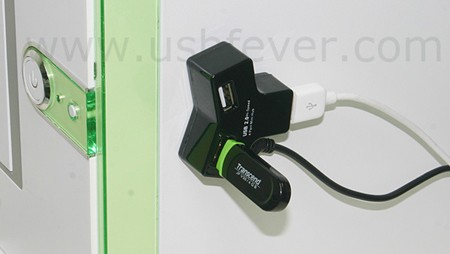
4-port USB Revolving Hub is simply useful


It's actually pretty amazing what you can do with four extra USB ports. For instance, you can chill a Coke Zero for you and three buds. You can power four sets of warming gloves. You can cover the family in USB-heated blankets. Whatever you choose to do, you'll likely have a much easier time hooking things up if using the 4-port USB Revolving Hub. Two of the sockets remain flat, but two can rotate up to 90-degrees each to provide ultimate plug-n-play flexibility. Claims yours in black or white for $12.
[Via: Coolest-Gadgets ] [Tag: usb, usb hub, UsbHub ]

Scosche Passport FireWire-to-USB iPod adapter gets reviewed


Okay, so this adapter doesn't directly convert a FireWire 400 socket into a USB port, but for all intents and purposes here, it does as much. You see, Scosche's Passport was designed to channel the energy from older FireWire-based iPod charging gear into the USB prongs that the newer iPhone / iPods only accept. Macworld was able to get ahold of one for review, and in testing, it found that everything worked well when toying with new iPods, and while it was designed specifically for in-car applications, critics found that it even worked (albeit inelegantly) with dock-cradle accessories. Was it worth $30? Absolutely, so long as you'd rather burn $30 than replace that mess of wires you've got behind the dashboard (and you would).
[Via: Engadget ] [Tag: adapter, firewire, ipod, ipod accessory, IpodAccessory, Passport, review, Scosche ]

SuperSpeed USB 3.0 spec officially released, first chipset demonstrated


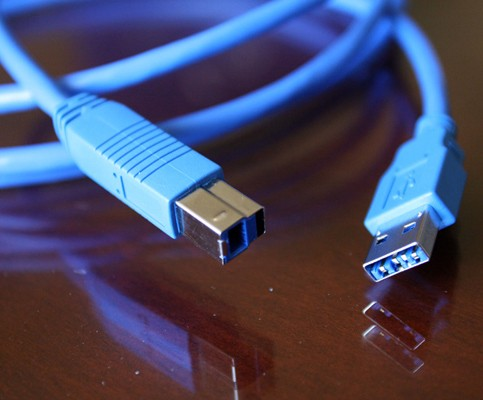
It's been nearly a year since we first saw the USB 3.0 connector make an appearance at CES, and after months of corporate infighting, spec-polishing, and technical navel-gazing, the future of consumer peripheral connectivity is here -- in the form of complete specifications and a demo. Yeah, so maybe SuperSpeed USB isn't making the most dramatic entrance ever, but hey, it doesn't have to with 4.8Gbps transfer speeds, improved power management, and backwards compatibility with USB 2.0 along for the ride. As expected, the first wave of devices won't hit until 2010, but Symwave's giving attendees of this week's SuperSpeed conference a taste of tomorrow with a demo of the Quasar USB 3.0 chipset, which is targeted at "sync-and-go" devices like phones and media players. Sounds lovely -- now if you'll excuse us, we have to go back to mourning the death of FireWire 400.

[Via: Gearlog ] [Tag: 3.0, superspeed usb, superspeed usb 3.0, SuperspeedUsb, SuperspeedUsb3.0, symwave, usb, usb 3.0, usb 3.0 superspeed, usb superspeed, Usb3.0, Usb3.0Superspeed, usb30, UsbSuperspeed ]

Magnetic 4-port USB hub: for brazen daredevils only


We know, the minuscule magnets adorned on this 4-port USB hub aren't technically strong enough to have any severe effect on your data, but seriously, why would you chance it? In what has to be one of the worst ideas in low-end technology to ever grace our eyes, the magnetic 4-port USB hub enables users to stick their hub on any nearby file cabinet, metal plate or refrigerator door, though we can't figure out why that's such an awesome benefit. If you can, however, feel feel to show off your carefree side by handing over $13.99.
[Via: Engadget ] [Tag: dumb, magnet, stupid, usb, usb hub, UsbHub ]

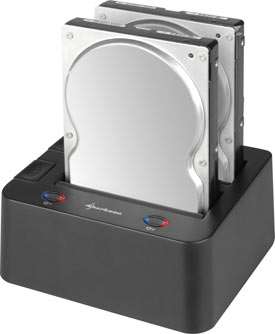
Sharkoon's SATA QuickPort Duo gives product category some credence


When the SATA HDD Stage Rack launched last October, we figured it would just be a one-off gizmo that all of four or five people would pick up. A year later, we're staring at a smattering of iterations from a number of companies. Sharkoon's own attempt at beefing up this apparent product category looks to be a pretty solid product, as the SATA QuickPort Duo gives owners the ability to slam in two 2.5- / 3.5-inch internal SATA hard drives and connect them up to a PC via USB 2.0 or eSATA. Unfortunately, the €47 ($64) price tag is a touch on the high side, but it is the Cadillac of the bunch, you know.
[Via: Engadget ] [Tag: external hard drive, ExternalHardDrive, hard drive, HardDrive, HDD Stage Rack, HddStageRack, QuickPort Duo HD Dock, QuickportDuoHdDock, SATA QuickPort Duo, SATA QuickPort PRO, SataQuickportDuo, SataQuickportPro, Sharkoon ]

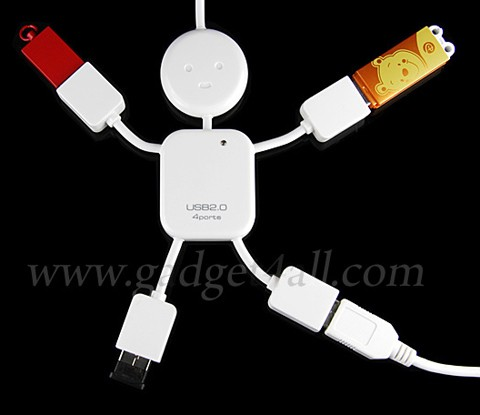
Super Kid 4-port USB hub makes peripheral swapping fun again


Come on, the picture tells the whole story, does it not? The $14 Super Kid 4-port USB hub gives you four of the funnest USB 2.0 ports you'll ever have, and the arms / legs are totally pliable, too. Just don't overload him with USB-powered lamps and cooling devices -- a boy can only handle so much.
[Via: Coolest-Gadgets ] [Tag: gumby, stick figure, StickFigure, super kid, SuperKid, usb, usb hub, UsbHub ]

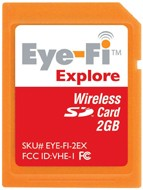
Eye-Fi making wares twice as fast, expanding internationally


Frustrated by somewhat sluggish transfers from your otherwise spectacular Eye-Fi card? Fret not, as the company has just announced a forthcoming update at Photokina that will reportedly enable new and existing Eye-Fi owners to make "the upload of digital photos from camera to computer twice as fast." Also of note, as of October 5th, users can even add features that aren't already included on their card and renew annual services by tapping into the updated Eye-Fi Manager Web application. In related news, the outfit will be pushing its wares to Japan and Canada by the year's end, and in even more related news, Eye-Fi now supports direct photo uploads to Apple's MobileMe and the AdoramaPix service.
[Via: Engadget ] [Tag: canada, eye-fi, flash, flash memory, flash storage, FlashMemory, FlashStorage, international, japan, lexar, mobileme, PHOTOKINA, PHOTOKINA 2008, Photokina2008, SD, wifi ]

1.5TB FreeAgent XTreme Anchors Onslaught of Stylish Seagate Hard Drives [Storage]


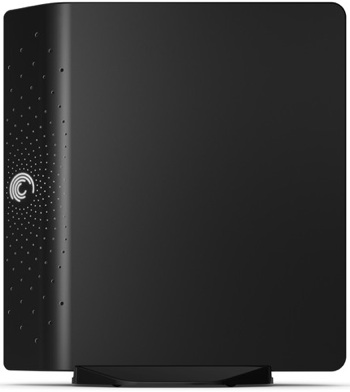
That there is the grandpappy of those leaked Seagate hard drives, the 3.5-inch, 7200RPM, 1.5TB FreeAgent XTreme. It connects via USB 2.0, FireWire 400 or eSATA, the latter of which transfers files at a blazing 3GB/second. Available in October, the $300 LED-filled drive comes in three more sizes starting at $160 for 500GB. Seagate launched a whole slew of other HDDs too, including 5400RPMers, 2.5" slim drives in four colors and two Mac-ready drives that'll save you the inconvenience of running Disk Utility for $40-$70 more than their PC-counterparts. Catch 'em in pics and press release down below.
SCOTTS VALLEY, Calif. — September 15, 2008 — Seagate (NYSE: STX), the world leader in storage solutions, today announced the Fall 2008 lineup of the company’s award-winning FreeAgent™ external hard drives. This new generation of the Seagate® FreeAgent™ family includes attractive desktop and mobile options, for both Mac® and Windows® operated PCs that make it a breeze to back up, share and protect valuable digital content like photos, videos and music. Seagate’s flagship offering, the FreeAgent Go portable storage solution, is the slimmest external drive available today. At a height of only 12.5mm, the new FreeAgent Go easily fits in a pocket while still including all the advanced shock and vibration protection people have come to expect from Seagate. Another industry first, the new FreeAgent Go is the first external hard drive to offer a docking option, providing a practical way to move from the desk to the road, while leaving the hassle of fumbling with cables and locating USB ports to the history books. With up to 500GB of capacity, the FreeAgent Go bridges the gap between standard portable solutions and desktop solutions with enough storage to carry entire libraries of movies, pictures and music. No longer does one need to sacrifice capacity for portability, Seagate FreeAgent Go provides the benefits and convenience of both in a truly seamless on-the-go package. “With the amount of content being created and consumed today, the average broadband household will soon need close to a terabyte of storage to account for their personal media collections on PCs, portable devices, and DVRs,” said Jane Shields, research analyst, Parks Associates. “With Seagate’s coupling of high-capacity, reliable and easy-to-use solutions with attractive designs, the company is helping more people enjoy the benefits that come with backup and sharing of their digital media collections.” “The growth of the 2.5-inch form factor external hard disk drive market has been very strong – almost doubling in 2Q08 compared with 2Q07,” said Wolfgang Schlichting, research director, Removable Storage at IDC. “This growth is much higher than the overall market and driven by the products’ convenient size and connectivity, as well as their large storage capacity and affordability.” The FreeAgent Go desktop docking station is sold separately and comes paired with a black leatherette carrying case to add style while protecting the drive from the bumps and scratches encountered while traveling in hand bags and during other on-the-road adventures. The FreeAgent Go is now available in a variety of popular colors, including silver, black, red, and blue. The drive also ships with a flexible, thin USB 2.0 travel cable. The FreeAgent Desk drive and FreeAgent XTreme™ drive are the family’s two 3.5-inch high-capacity desktop offerings, and provide up to 1.5 Terabytes of storage. The sleek and modern design of these drives provides the flexibility to sit horizontally or stand vertically to maximize your workspace. The FreeAgent Desk drive is a brushed aluminum high-capacity solution with a USB 2.0 interface. The FreeAgent XTreme drive is a black, brushed aluminum high-capacity storage solution with a triple interface of eSATA, USB 2.0 and FireWire 400. “The first FreeAgent storage solution offering introduced in 2007 unquestionably made a mark for Seagate in the consumer space, demonstrating that hard drives can be designed to provide a stylish complement to a computing environment,” said Pat King, senior vice president of Seagate’s Consumer Solutions Division. This second-generation of FreeAgent storage solutions takes the extra step of providing easy-to-use technology in a consumer-friendly package.” Seagate FreeAgent drives are compatible with Windows® Vista® and Windows® XP® Operating Systems and come equipped with Seagate Manager™ software, an enhanced application that provides scheduled automated back-ups and multi-computer synchronization. The FreeAgent drives for Windows also offer security in the form of software-based AES-256bit encryption and Seagate DrivePass™ password protection for drive access to help keep your information safe and private. The environmentally smart utilities help save energy by putting the drive in sleep mode once it has been idle for 15 minutes. Seagate FreeAgent hard drives include Energy Star 5 rated AC adapters and are now packaged in 100% recyclable materials. And with Seagate’s industry-leading five-year limited warranty, the FreeAgent storage solutions provide the confidence that your digitally-captured memories and life’s work is on a hard drive you can trust. As part of this product introduction, Seagate will also unveil external storage solutions designed specifically for the Mac community. The Mac community has spoken and Seagate is listening. The FreeAgent Go for Mac and FreeAgent Desk for Mac are both formatted for use with Mac OS X out of the box and are Time Machine ready with FireWire800/400 or USB 2.0 connectivity. Seagate understands that Mac customers have specific needs and performance requirements and these demands are being met with the FreeAgent external hard drive for Mac offering. FreeAgent™ | Go Drive for Mac
With a FireWire 800/400 interface, docking station and carrying case the Seagate FreeAgent Go drive for Mac is equipped to move seamlessly between the desktop and road. Formatted for use with Mac OS X and Time Machine ready, the FreeAgent Go for Mac is the perfect back up companion for any Apple® computer. Seagate FreeAgent Go for Mac is available this month for a manufacturer’s suggested retail price (MSRP) of $159.99 USD for 250GB and $189.99 USD for 320GB. FreeAgent™ | Desk Drive for Mac
The high-capacity FreeAgent Desk drive for Mac features a brushed aluminum arctic silver finish that is a perfect match for the current iMac Desktop. With a FireWire 800/400 connection and tuned to be Time Machine ready, the FreeAgent Desk for Mac is available this month for a manufacturer’s suggested retail price (MSRP) of $169.99 USD for 500GB, $269.99 USD for 1TB and $349.99 USD for 1.5TB (available in October). FreeAgent™ | Go Drive
A pocket-sized storage drive that packs a punch, the Seagate FreeAgent Go drive is slim, compact and shipping in four color options available as of this month in the US, Europe and Asia Pacific for a manufacturer’s suggested retail price (MSRP) of $119.99 USD for 250GB, $149.99 USD for 320GB and $239.99 for 500GB. FreeAgent™ | Dock and Case
Protection for those on the go and a docking station for convenient and quick access to your files, these accessories for the FreeAgent Go drive are sold separately. The dock and case will be available in the US, Europe and Asia Pacific for a manufacturer’s suggested retail price (MSRP) of $29.99 USD. FreeAgent™ | Desk Drive
This convenient desktop storage solution, Seagate FreeAgent Desk drive, is the perfect desktop companion for basic back up and security for all your digital files. This high-capacity USB 2.0 interfaced drive provides enough room to hold libraries of images, music and video. The FreeAgent Desk drive is available as of this month in the US, Europe and Asia Pacific, for a manufacturer’s suggested retail price (MSRP) of $129.99 USD for 500GB, $149.99 USD for 640GB, $229.99 USD for 1TB and $279.99 USD for 1.5TB (available in October). FreeAgent™ | XTreme™ Drive
Designed for performance, especially for those who work with high-definition video and graphic files, the Seagate FreeAgent XTreme drive is the perfect fit. The FreeAgent XTreme delivers a 3GB per second transfer rate with the eSATA connection. This drive also includes FireWire 400 and USB 2.0 connection options. The FreeAgent XTreme is available worldwide for a manufacturer’s suggested retail price (MSRP) of $159.99 USD for 500GB, $179.99 USD for 640GB, $259.99 USD for 1TB and $299.99 USD for 1.5TB (available in October).
[Seagate]
[Via: Gizmodo, The Gadget Blog ] [Tag: ]

Sony VAIO VGP-UPR1 notebook dock boasts DisplayLink technology


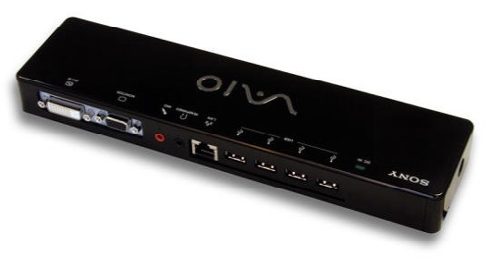
Lookin' a USB docking station for your VAIO (or other machine)? Look no further than the VAIO-branded VGP-UPR1, which is compatible with a whole alphabet worth of Sony's laptops. The unit boasts a VGA / DVI port, four USB sockets, an Ethernet jack and headphone / microphone connectors; furthermore, it supports resolutions up to 1,600 x 1,200, and of course, DisplayLink's USB graphics technology. Not too terribly painful at $199.99, and it's out now for folks in the US, EU and Japan.
[Via: CNET ] [Tag: displaylink, sony, usb, USB Docking Station, usb graphics, UsbDockingStation, UsbGraphics, VAIO, VGP-UPR1, vista, Vista Aero, VistaAero ]

SATA Revision 3.0 specification to double transfer speeds to 6Gbps


While not the most mesmerizing news to flow from 2008's Intel Developer Forum, this is a welcome piece for anyone who appreciates hasty transfers. The Serial ATA International Organization (SATA-IO) has announced that the partially complete SATA Revision 3.0 specification will eventually double data transfer rates to 6Gbps. This week's release gives the green light to developers to begin designing products based on said tech, though the finalized paperwork won't be ready until later this year. On a related note, the same consortium has announced the formal launch of its certified logo program, which will enable consumers to easily recognize when a product has passed SATA-IO interoperability testing and is a bona fide SATA 6Gb/sec-enabled device. Enough chatter -- wares, please?

[Via: SmallNetBuilder ]
[Tag: IDF,IDF 2008,Idf2008,interoperability,logo,sata,SATA certified,SATA Revision 3.0,SATA-IO,SataCertified,SataRevision3.0,speed,testing,transfer,transfer speed,TransferSpeed ]

Ozmo's WiFi PAN mouse cuts the wires and the Bluetooth


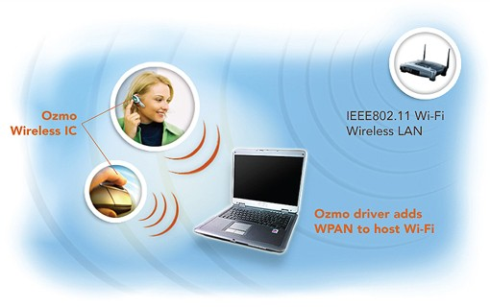
We've never really had anything bad to say about our Bluetooth mouse experience (this week, at least), but Ozmo thinks it can do better. The company has built an optical mouse that connects over low-power WiFI Personal Area Network (PAN) technology. Ozmo has special drivers for the PC to allow it to do concurrent WLAN and WPAN connections, and is compatible with 802.11g and 802.11a. They're also fighting Bluetooth on the audio front with a headset, where we think they might find a more welcome reception -- especially when they get some good stereo headphones on the market. Intel and Ozmo just recently trotted out this WiFI PAN tech a couple of months ago, and what we have here are reference designs for use by OEMs, so no word on commercial availability just yet.

[Via: I4U ]
[Tag: headset,mouse,ozmo,wpan ]

USB 3.0 gets seriously detailed


Just last week, Intel gave AMD, NVIDIA and a whole host of friends what they had been clamoring for: 90% complete USB 3.0 controller specifications. Now, the cool cats over at MaximumPC have churned out an encyclopedic writeup that details USB SuperSpeed remarkably well. The highlights include assurance that USB 3.0 will be backwards-compatible with USB 2.0 and that it'll provide transfer rates up to ten times more than USB 2.0's 480Mbps limit (that's 4.8Gbps). Furthermore, we're told that uploads and downloads are kept on separate lanes, the cables are thicker, it will charge more devices more quickly, and it will be much more mindful of energy waste. Go on and get yourself completely schooled in the read link below.

[Via: Engadget ]
[Tag: backwards-compatible,connection,connector,details,peripherals,port,protocol,specification,usb,usb 3.0,USB Superspeed,USB-IF,Usb3.0,UsbSuperspeed ]

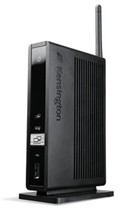
Kensington kills a few more cables with Wireless USB Docking Station


Look out, cable pundits, your next must-have gadget has arrived. Kensington's Wireless USB Docking Station is pretty straightforward -- you simply plug in up to five USB devices along with your external monitor in order to access all of those gizmos sans cabling from your Wireless USB-enabled machine. Sure, the range is capped at 15-feet, but never having to plug in that printer / scanner / external HDD / USB-powered fan again when setting up your work lappie at home will be a huge relief. Look for this one to ship soon for $229.99.

[Via: Electronista ]
[Tag: accessory,kensington,USB,usb dock,UsbDock,w-usb,wireless USB,wireless usb dock,wireless usb docking station,WirelessUsb,WirelessUsbDock,WirelessUsbDockingStation,wusb ]

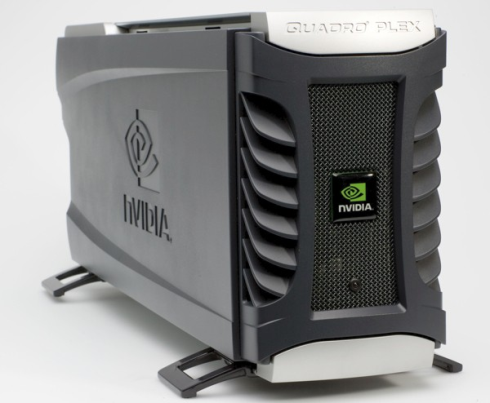
NVIDIA releases new Quadro Plex D CUDA desktop rigs


NVIDIA's really pushing the GPU-as-CPU angle at SIGGRAPH this year -- we've already seen the PhysX and CUDA-powered GeForce Power Pack for consumers, and the company is also updating the Quadro Plex series of visual co-processors for workstation customers. The new Quadro Plex 2200 D2, designed for large datasets and models, crunches data through two Quadro FX 5800 GPUs (totalling 480 CUDA cores) and 8GB of RAM, while the Quadro Plex 2100 D2 is optimized for large multidisplay rigs with four Quadro FX 4700 GPUs and support for up to eight monitors. Sounds fun -- and we're guessing the people who can justify the $10,500 starting price for these rigs think so too.

[Via: Engadget ]
[Tag: cuda,nvidia,quadro fx,quadro plex,Quadro Plex 2100 D2,Quadro Plex 2200 D2,quadro plex d,quadro plex d2,QuadroFx,QuadroPlex,QuadroPlex2100D2,QuadroPlex2200D2,QuadroPlexD,QuadroPlexD2 ]

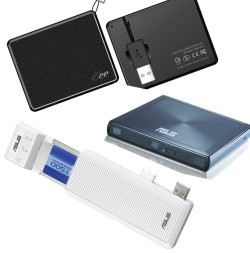
Eee hard drive, optical drive, and 3G card continue to reduce meaning of Eee brand


Okay, so there's clearly a tube that dispenses marshmallows to the ASUS marketing department whenever it comes up with another product to slap the Eee brand on, because this just getting silly. In addition to the countless Eee laptops, Eee Box desktop, Eee monitor, Eee televisions, and other Eee-branded crap, we're hearing the company is working on a line of accessories, including an external hard drive, optical drive, and WWAN card. None of this is official quite yet, but knowing ASUS, it'll be out in 30 different varieties by the end of the month.

[Via: Engadget ]
[Tag: asus,eee,eee accessories,eee pc,EeeAccessories,EeePc,hard drive,HardDrive,optical drive,OpticalDrive,wwan ]

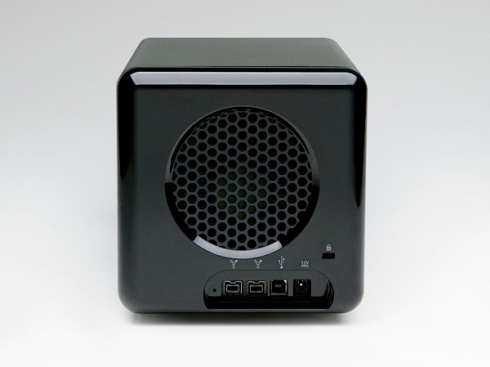
Drobo (second-gen) mini-review


Despite its shortcomings, we were pretty into the original Drobo when it was launched about a year ago. Not only is it crazy easy to set up and get running, but being able to swap out drives and continuously expand your storage pool without completely replacing your array is obviously advantageous compared to traditional RAID arrays. So it kind of goes without saying that we were stoked to hear Data Robotics was launching a new Drobo, which promised FireWire 800, and quieter, faster operation.
We were kind of hoping they'd get it over with and build in Ethernet (or at least WiFi) connectivity instead of continuing to charge an extra $200 for the DroboShare add-on -- that it comes without left us with some mixed feelings. But then again, this new model doesn't cost any more than the first-gen product ($500), so we can't hold it too much against 'em -- and as we found, it is a fair amount faster (and significantly quieter) than its predecessor. Read on for more.
We won't dwell much longer on the fact that Drobo still doesn't have its own network connectivity (and if we were gamblers, our money would be on integrated DroboShare whenever the third-gen device comes out), but if you're not planning on connecting your device directly to your computer, be prepared for the extra cash outlay. The upshot, however, is that the DroboShare will soon be able to host on-board applications and servers ("DroboApps") that make use of your Drobo's storage pool, potentially giving your whole setup a great deal more value. That is, assuming the developer community puts some weight behind the recently released SDK (more on that here).
Now, before we get to our experiences with the device, we feel obligated to take a moment to note that our unit suffered from a strange series of random, somewhat jarring reboots. Data Robotics seems to have narrowed the issue down to a pre-production power Y-connector from our early DroboShare that was causing power shorts on the new device. We haven't seen the issue pop up again since they replaced the connector, and Data Robotics assured us that they've tested their hardware and software extensively, never having seen the issue we experienced -- so we'll give them the benefit of the doubt.
Anyhow, if you're just in it for the speed, we found the new Drobo does deliver -- although maybe not on the same levels demonstrated by Data Robotics. Their tests show fairly consistent speed increases of over 2x on writes and between 60-100% on reads using AJA Kona. We did all our tests using Xbench, which showed more conservative improvements over the first-gen device. Using a set of four varied SATA drives, we got somewhat smaller speed increases over USB, usually in the range of 10-20%. Occasionally we got up to 100%+ on some operations (like 4k block uncached random writes) -- but on other operations the new Drobo was actually a slight bit slower (like 256k random uncached reads).


Over FireWire 800, the gains were sometimes much more pronounced -- over 100% faster than first and second-gen Drobo's USB 2.0 when performing 256k random uncached reads, for instance. But with numerous results stuck within a window of 10-33% faster than USB 2.0, often our FireWire tests weren't completely explosive. Simple, large (1.25GB) file copy tests showed that USB 2.0 transfers were about 9% faster in the second-gen Drobo, and an encouraging 49% faster over FireWire 800. If you're working with huge amounts of data, that kind of speed can really tend to add up. (Although it's also worth mentioning that if you're looking for blinding throughput for doing things like editing huge full-HD video streams, you're probably not after a device like the Drobo or competing storage / NAS enclosures anyway, and should likely looking for something a little more on the enterprise / workstation-class end of the spectrum.)
If it fits the bill for what you're looking for, the second-gen Drobo is still our favorite home and prosumer storage device in this class. The new interface and speed increases are easy to appreciate, but even if you trade those in for slower access over a network-attached DroboShare, you still stand to take advantage its forthcoming DroboApps and unusually simple auto-mounting system. And running four hot 7200 RPM drives -- which should be fairly high up on the device's thermal envelope -- the new model is indeed noticeably quieter than its predecessor, even despite the unfortunate loss of the previous model's jet engine exhaust motif. Dropping $500 on a device with no included drives (or even network access) is still pretty tough to swallow for many buyers, but the benefits of having a dynamically expandable, redundant, easy to manage storage pool are still as strong an incentive as ever to be a little spendy -- if not on a Drobo, than perhaps on a ReadyNAS with X-RAID. It's your data, after all, so treat it right.

[Via: Engadget ]
[Tag: data robotics,DataRobotics,drobo,features ]

Data Robotics announces second-gen Drobo with FireWire 800


For those whose major complaint about the Drobo was its lack of FireWire 800, today's your day. The new version of the virtualized-storage device features the much requested interface (and a second port for daisy-chaining), but despite the fact that it still lacks built-in Ethernet / WiFi, it does come equipped with an upgraded processor to better take advantage of FireWire 800's higher throughput, as well as a much larger, quieter case fan. Data Robotics claims their new model can achieve data transfer speeds of more than 2x over the original model, as well as outperform ReadyNAS and LaCie models (in RAID 1/5) when tested with identical drives.
The price stays the same at $500 for the device itself, and (as before) you can buy it bundled with two 1TB drives (for $900) or four 1TB drives (for $1,300). For those waiting for the price to dip even lower, Data Robotics is also clearing out inventory on its earlier model; until they sell out, first-gen Drobos will be going for $350, or $750 and $1,075 bundled with two and four 1TB drives, respectively.

[Via: Engadget ]
[Tag: breaking news,BreakingNews,data robotics,DataRobotics,drobo,firewire,firewire 800,Firewire800 ]

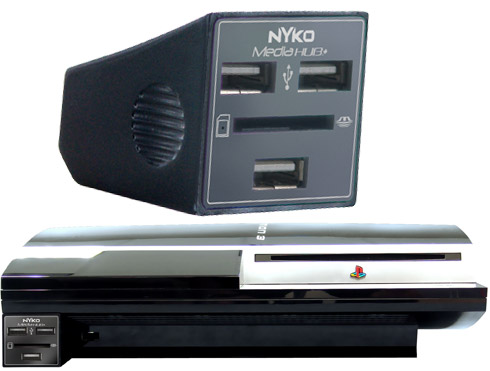
Nyko's Media Hub for PS3 inelegantly adds USB ports, multicard reader


Nyko's got a knack for delivering some of the ugliest, most preposterous third-party peripherals on the planet, yet -- for whatever reason -- we can't help but love 'em. The latest abomination from the outfit that begins to grow on you almost immediately is the Media Hub for PlayStation 3. For those that went cheap on the 40GB PS3 and missed out on a multicard reader and the full array of USB ports, this here adornment presumably connects to one of those USB sockets and adds three more while tossing in the card reader you've so dearly missed. Thankfully, Nyko's only charging $19.99 for this, so you should be okay even if your ship has yet to come in.

[Via: Joystiq ]
[Tag: Media Hub,Media Hub for PS3,MediaHub,MediaHubForPs3,multicard reader,MulticardReader,Nyko,peripheral,playstation 3,Playstation3,ps3,sony,usb hub,UsbHub ]

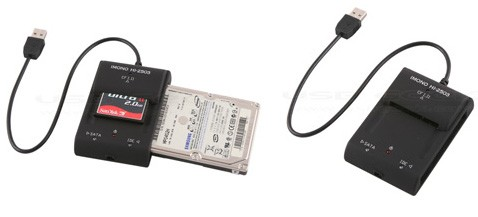
SATA / CF / IDE to USB 2.0 Bridge Adapter is way handy


Though there are plenty of whatever-to-USB adapters out there, this critter just tickles our fancy with its extraordinary utility. The SATA / CF / IDE to USB 2.0 Bridge Adapter enables owners to connect CompactFlash cards, SATA drives and even IDE drives to any computer with a spare USB 2.0 port. Which is like, every computer made since forever ago. Usually, we'd suggest that practically every travel pack should possess one of these, but the cheapskate in us still feels the $22 price tag is a few notches too high.

[Via: Engadget ]
[Tag: adapter,cf,ide,sata,usb ]

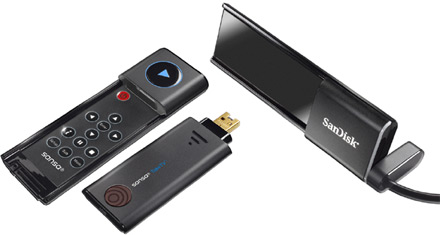
SanDisk kills TakeTV dead


Here's a sure sign of unpopularity: SanDisk stopped selling its TakeTV device, and shut down TakeTV's Fanfare content portal, on May 15th... and nobody noticed. Originally inspiring fond sentiments with its sneakernet approach to getting videos from your computer to your PC, SanDisk's TakeTV just never got much traction. Faced with competition from the likes of Microsoft and Apple -- not to mention the oodles of networked devices that offer up more content and more convenience which have been cropping up recently -- we'd be surprised if TakeTV sold enough units to fill a briefcase. Anybody out there have any fond memory's of TakeTV's short stint?

[Via: Engadget ]
[Tag: fanfare,features,sandisk,taketv ]