Remember those comparatively cheap RunCore SSDs we caught wind of last month? Yeah, well those puppies are shipping out. The unashamedly named 1.8-inch Low Cost Zif PATA SSDs can be sealed in a corrugated box and shipped off to your place of residence for $69.99, $119.99, $199.99 or $389.99 depending on size (16/32/64/128GB, respectively). If you're looking for a bit more room and have the space to install it, the February-bound 256GB Pro III Hyper Speed 2.5-inch SATA SSD is right down your alley. The drive boasts a maximum read rate of 230MB/sec and a top write speed of 150MB/sec; unfortunately, that whole "low cost" mantra fades a bit on this one, with the $699.99 list price causing the eyes to open just a wee bit wider.
[Via: Engadget ]
[Tag: hard drive, HardDrive, netbook, netbook SSD, NetbookSsd, RunCore, SATA, SSD ]
RunCore's 1.8-inch netbook SSDs now shipping, 2.5-inch 256GB edition coming soon

Panasonic set to unveil powerline networking prototypes aplenty at CES

[Via: Digg ]
[Tag: ces, ces 2009, Ces2009, hd-plc, panasonic, powerline, powerline networking, PowerlineNetworking ]
HP debuts Mac-compatible MediaSmart ex485 / ex487 home servers

It's been a long, long while since we've heard the words HP MediaSmart, and in fact, the last mention that was made wasn't exactly positive. HP's looking to put the past away and forge ahead with two new ones in the line: the Mac-friendly ex485 and ex487. Both devices are (of course) based on Microsoft's Windows Home Server platform, and just like their predecessors, these are meant to automatically backup machines around the home and act as a network-accessible repository for all things media. The pair features HP's Media Collector (used to schedule, copy and centralize digital files from networked PCs) and also acts as an iTunes server and an external backup device for Macs running Leopard and using Apple's Time Machine software. As for specs, you'll find a 2GHz Celeron CPU in each with 2GB of DDR2 RAM, gigabit Ethernet, four USB 2.0 ports, one eSATA jack and four internal HDD bays. The February-bound duo can be pre-ordered on January 5th for $599 (ex485; 750GB) / $749 (ex487; 1.5TB), and each can be scaled up to 9TB. Full release is after the break.HP Launches New Home Server for PCs and Macs
HP MediaSmart Server centralizes digital media and files for backup, remote access, sharing and uploading to social media sites
PALO ALTO, Calif., Dec. 29, 2008 – HP today launched a home server designed for use with both Windows and Mac computers.
Based on the Microsoft Windows® Home Server platform, the HP MediaSmart Server ex485/ex487 is a central repository for automatically backing up and accessing digital music, videos, photos and documents from multiple computers on a home network.(1)
The MediaSmart Server automatically organizes files across all PCs, streams media across a home network and the Internet,(2) and publishes photos to popular social networking and photo sharing sites.
"A growing number of digital-savvy households have both Windows and Mac computers, with hundreds and sometimes thousands of media files and documents scattered across these devices," said Jason Zajac, vice president of strategy, Worldwide Attach Group, HP. "The HP MediaSmart Server protects, stores and organizes this content from anywhere on a network so consumers can access and share it any place they are connected."
"HP continues to innovate on the Windows Home Server platform giving consumers even more options to enjoy and protect their precious memories and valuable data," said Charlie Kindel, general manager, Windows Server Solutions, Microsoft. "We believe consumers will embrace the new MediaSmart Server as one of the most exciting computing products for the home."
MediaSmart Server ex485/ex487 features include:
· HP Media Collector: conveniently schedules the MediaSmart Server to copy and centralize digital files and libraries from networked PCs
· Media Streaming: remotely streams photos and music to any Internet-connected PC or Mac
· Server for iTunes: centralizes iTunes music libraries on the server for playback to any networked Mac or PC running iTunes
· HP Photo Publisher: easily upload photos to Facebook®, PicasaTM Web Albums and Snapfish(3)
· HP Photo Viewer: allows easy sharing of photos with friends and family
· PC Hard Drive Backup: backs up networked PCs via the Windows Home Server backup feature
· Mac Hard Drive Backup: backs up Macs running Leopard using Apple Time Machine software
· Server Backup: duplicates designated shared folders to a separate hard disk drive
· Online Backup: duplicates designated folders to Amazon's S3 online backup service for an additional layer of protection
· Smart Power Management: can schedule times for server to go to "sleep" and "wake up," saving on energy costs
· Processor: Intel® Celeron®, 2.0 GHz 64-bit. Two gigabytes (GB) of 800-MHz DDR2 DRAM now standard on MediaSmart Server
· Expandability: additional drives can be added for up to 9 terabytes (TB)
"Customers are always looking for the right mix of features and ease-of-use when choosing digital home products," said Danielle Levitas, group vice president, consumer, broadband and digital marketplace at IDC. "HP's focus and investment in software allows it to deliver a home server with compelling features for Mac and PC users while offering a great customer experience that helps simplify the complexity of the connected home. This unique offering will help expand the home server market."
Pricing and availability
Manufacturer's suggested retail price for the HP MediaSmart Server ex485 with 750 GB of hard disk storage is $599 while the HP MediaSmart Server ex487 with 1.5 TB is $749.(4)
The HP MediaSmart Server can be pre-ordered beginning on Jan. 5, 2009, from Amazon.com, BestBuy.com, Buy.com, Frys.com and NewEgg.com; it is expected to ship in February.
The first 200 consumers who visit HP Home & Home Office (www.hpshopping.com) or call +1 888 271 2982 between Jan. 5 - 11, 2009, to reserve a MediaSmart Server and use coupon code "AC5674" will receive a $50 savings off their purchase.(5)
More information is available at www.hp.com/go/mediasmartserver.
[Via: Engadget ] [Tag: Apple, celeron, ex485, ex487, HP, itunes server, ItunesServer, Mac, Mac compatible, MacCompatible, Media Collector, media server, media smart, media streaming, MediaCollector, MediaServer, MediaSmart, MediaStreaming, OS X, OsX, server, WHS, windows home server, WindowsHomeServer ]
Intel ships 160GB X25-M SSD, 1.8-inch X18-M flavor coming soon

[Via: Engadget ]
[Tag: intel, now shipping, NowShipping, sata, ship, shipping, ships, SSD, x18-m, x25-e ]
21 USB drives tested, 20 immediately misplaced

[Via: Engadget ]
[Tag: flash drive, flashdrive, lexar, ocz, sandisk, super talent, SuperTalent, usb, usb drive, usb drives, UsbDrive, UsbDrives ]
OCZ to begin selling 12GB DDR3 kits
OCZ may be planning to release their 12GB memory kit soon, with their Gold-series and Platinum series 12GB PC3 kits now being officially listed for retail. The kits are going to be aimed at the Core i7 platform, and it appears that they will be triple-channel kits operating at 1333MHz each, with the only difference between the two being latency. They are coming in at a very high premium, with the Platinum kit costing more than what a GeForce GTX 295 is expected to.
Where is the inherent advantage of having such a massive quantity of RAM? Even for an enthusiast and avid gamer, the practicality of 12GB of RAM is limited at absolute best. Having a 64-bit operating system installed is much more common these days, but having a single game or app that can take advantage of that much RAM is not. As OCZ caters primarily to enthusiasts and gamers, one might think there's no use yet for a 12GB kit from them. It does, however, offer future-proofing. Three years ago, 4GB of RAM was for the most part a waste for gamers. Now it's a stock option even on some mainstream laptops and many avid gamers consider it to be the sweet spot.
[Via: Justin Mann ]
[Tag: ]
LaCie 1U rack-mountable Ethernet Disk works with Time Machine
LaCie's newest Ethernet Disk isn't for the faint of heart... nor for those with just a few files to backup. Oh no -- this one's for the storage professional. Housed in a 1U rack-mountable enclosure, the NAS device can hold up to 6TB of data and can support up to 100 users on Mac, Windows or Linux platforms. Also of note, it functions just fine with Apple's Time Machine, which is more than Cupertino's own AirPort Disk can say (maybe). It's available this very moment in 2TB, 4TB and 6TB capacities starting at $749.99.
[Via: Engadget ]
[Tag: ]

Toshiba announces 512GB SSD, other smaller SSDs

We'd heard Toshiba was working on 512GB SSDs back in April, and the company's delivering right before CES. The industry-first half-terabyte drive is the highlight of Tosh's new line of 43nm MLC drives, which also includes 64GB, 128GB and 256GB units in both 1.8-inch and 2.5-inch form factors -- just right to pudge out your laptops and netbooks. No word on price, but you've got plenty of time to save up, as these won't hit mass production until at least April.
[Via: Engadget ] [Tag: 512gb ssd, 512gbSsd, biggest ssd, BiggestSsd, flash drive, FlashDrive, mlc, nand, ssd, toshiba ]
Sierra Wireless intros 'ruggedified' AirCard 501 and 502 modems

Sierra Wireless has just announced two new ExpressCard modems for HSUPA wireless users. Sporting download speeds up tp 7.2Mbps and upload speeds up to 5.76Mbps, the AirCard 501 supports 850 / 1900 / 2100 MHz bands, while the AirCard 502 covers 900 / 1900 / 2100 MHz. Both are backward compatible with UMTS, EDGE and GSM networks world 'round, and they're being touted as "durable," meaning there are no little antennas or plastic pieces to break on you. That last part should be good news to all of you post-apocalyptic Road Warriors out there (or not -- they're still just regular ExpressCards, as far as we can tell). The AirCard 501 is slated for release later this month, while those of you interested in the AirCard 502 will have to wait until the first part of 2009.
[Via: Slash Phone ] [Tag: AirCard, AirCard 501, AirCard 502, Aircard501, Aircard502, broadband, edge, GSM, HSUPA, sierra, sierra wireless, SierraWireless, UMTS, wireless ]
Sprint Dual U300 Modem Will Connect to Both EVDO and WiMax [WiMax]

Sprint's partnership with WiMax provider ClearWire looks to be bearing some hardware fruit, with the release of the first dongle to combine 3G cellular and 4G capabilities. The modem, called the U300, will be first available to customers of the Sprint/Clearwire "Clear" WiMax network in Baltimore, where their pilot program is under way. The connections will be managed automatically, much in the manner that 3G/2G phones handle them; the modem will connect to the faster WiMax by default, but will switch to the slower EVDO cell network when it's out of range or too weak. If these work well, they could be a boon to both Sprint and WiMax in general, as the of the appeal admittedly significant speed gain of WiMax over EVDO is mitigated by the need to purchase and carry around an extra adapter. Speaking of mitigating factors—the added convenience of the U300 doesn't quite justify its $150 with-contract price. The adapter should ship by the beginning of next week.
[Via: Gizmodo, The Gadget Blog ] [Tag: ]
4-port USB Revolving Hub is simply useful

It's actually pretty amazing what you can do with four extra USB ports. For instance, you can chill a Coke Zero for you and three buds. You can power four sets of warming gloves. You can cover the family in USB-heated blankets. Whatever you choose to do, you'll likely have a much easier time hooking things up if using the 4-port USB Revolving Hub. Two of the sockets remain flat, but two can rotate up to 90-degrees each to provide ultimate plug-n-play flexibility. Claims yours in black or white for $12.
[Via: Coolest-Gadgets ] [Tag: usb, usb hub, UsbHub ]
Toshiba, SanDisk to cut NAND production by 30 percent
Two of the largest firms in the semiconductor industry, Toshiba and SanDisk, have announced today that they will be cutting flash memory production by a steep 30 percent. The output reduction is largely attributed to a weak demand stemming from the global economic slowdown and an oversupply in the market for such chips.
The production cut will be effective beginning January 2009, for a yet to be determined period, and should affect the Yokkaichi operations plant in Japan, where the companies jointly produce flash memories on 200mm and 300mm wafers. This move will ultimately mean that chips will cost more, though SanDisk says it will also help them align their output in 2009 with demand in the current global market.
[Via: Jose Vilches ]
[Tag: ]
OCZ releases Gold Series 16GB SDHC cards
In addition to launching their Vertex-series SSDs last week, OCZ has increased their flash profile even further with the release of their “Premium Gold” series SDHC cards, high-class memory modules aimed at photographers and people who own high definition camcorders. The modules promise Class 6 speeds, with up to 150X write rates, which would equate to a speed of over 22MB/s. That's certainly fast for SD storage.
The modules come in sizes of 4GB, 8GB and 16GB. With a 16GB module, that's several hours of high definition recording on most camcorders. If you absolutely must have “Gold Series” SDHC modules, you will certainly be paying a premium, but as with all OCZ products they stand behind it with a lifetime warranty.
[Via: Justin Mann ]
[Tag: ]
Sony loads music and movies onto MicroVault Click USB drives, can't locate any buyers

Gee, Sony. We wonder how well this initiative will go over. In fact, we wonder what bigwig signs off on such a blatantly bad idea? In case you missed the memo, selling overpriced music on flash drives is not the next big thing in content delivery, though in fairness, we will give you the movie side due to file size limitations alone. All rants aside, Sony has just introduced new pre-loaded MicroVault Click USB drives, and the first three include Michael Jackson's Thriller (2GB; $19.99), The Da Vinci Code (4GB; $29.99) and Men In Black (4GB; $29.99). What's odd is that the outfit doesn't bother sharing how much free space is left for other uses, nor are we told that the likely DRM-laced material can be exported elsewhere in order to liberate memory on the stick. In other words, we'll pass. Gladly.
[Via: CNET ] [Tag: audio, flash drive, FlashDrive, MICROVAULT, MicroVault click, MicrovaultClick, music, Sony, USB, usb flash drive, UsbFlashDrive ]
Toshiba and SanDisk temporarily slash NAND Flash production by 30% in Yokkaichi

Despite the fact that folks will still be snapping up digital cameras, DAPs / PMPs and additional storage this holiday season, SanDisk and Toshiba don't see demand being anywhere near optimal. The pair, which are linked via a joint venture production plant in Yokkaichi, Japan, have decided it best to temporarily reduce NAND Flash output by around 30%. Here's the scary part: "the duration and extent of this reduction in fab output will depend upon market conditions." You guys are all going to feel really goofy when consumers realize they simply can't live without their constant flow of semiconductors and decorated Segways here in a few months -- just sayin'.
[Via: EETimes ] [Tag: business, economy, flash, flash memory, FlashMemory, industry, Japan, NAND, NAND flash, NandFlash, production, SanDisk, storage, Toshiba ]
Gogo in-flight WiFi taking off in six Delta flights tomorrow

We already knew that Delta was pushing its in-flight WiFi plans ahead, and starting tomorrow, a half dozen MD-88 shuttle flights will be live with internet from 35,000 feet. As with Virgin America, Delta Air Lines will be relying on Aircell's Gogo technology, though it will go down as the first US carrier to initiate a "fleet-wide rollout." Eventually, over 300 domestic mainline aircraft will enable guests to surf the intarwebz from way up high, and you'll know if the one you're boarding is lit if you see one of the above pictured "Wi-Fi Onboard" logos on the boarding door. The launch flights -- which will run from December 16th through the 31st -- will provide gratis access to the web, while standard pricing of $9.95 on flights of three hours or less and $12.95 on flights of more than three hours will presumably kick in on January 1, 2009. Happy trails, and don't forget to give us a visit while you're up there.
[Via: Switched ] [Tag: aircell, aircraft, airplane, Delta, flight, flights, gogo, in-flight, in-flight internet, in-flight WiFi, In-flightInternet, official ]
OCZ unveils Throttle eSATA SSD flash drive

We haven't seen a ton of eSATA flash drives, but OCZ is entering the fray with the Throttle, which looks a lot like the Ao-Lab unit we saw back in October. No pricing or release date is given, but Register Hardware estimates it'll be $32 for the 8GB model, $56 for 16GB and $160 for 32GB. For eSATA ports that don't provide power, the Throttle has a mini-USB port to give it some electrical juice that can also be used to transfer data, which should cover most scenarios unless you're at a phantasmagorical computer that somehow has only FireWire ports.
[Via: Maximum PC ] [Tag: esata, flash drive, FlashDrive, ocz, ocz throttle, OczThrottle, throttle, thumb drive, ThumbDrive ]
EFi-X shuts down EFi-X USA, says it doesn't support Mac clones
The Mac cloning soap opera just keeps taking crazy twists and turns -- Art Studios Entertainment, makers of the EFi-X dongle, have shut down EFi-X USA's plans to sell "Millennium" machines capable of running OS X just hours after they were announced. ASE CEO Davide Rutigliano sent us a statement saying that EFi-X USA was misinterpreting ASE's EFi-X certification program, that ASE will "NEVER sell machines or condone the sale of machines that compete with any brand," and that he personally ordered the project abandoned. Indeed, a visit to EFi-X USA's page confirms that the machines have been killed, although we're unsure what the terse statement "EFi-X USA LLC fights the clones and the clonemakers" is supposed to mean. All part of another strange chapter in the Hackintosh saga, we suppose. Check ASE's full statement after the break.
----
As you know, EFI-X uses a list of compatible to EFI and UEFI hardware. As strange as it seems, people have found difficulties to put together machines compliant with our standards, and we decided to create a Certification Program. This way not only we can make sure that people get the right hardware, (as non compatible hardware will even void their EFI-X warranty) but this opens the way to a much broader support, to new and exciting hardware, based on the user's requests.
This, today, created a monstrous misunderstanding. Our USA distributor, following (I have to say erroneously) the certification program built up a quite nice PC, but it was presented to the press in a totally erroneous way to which we at Art Studios Entertainment Media are absolutely unrelated to!
To be honest it wasn't intentional of them, but of course when I said that we at ASEM do not condone the merchandising of clones, I meant it. The press saw the "Millennium" project as a clone project, and I immediately ordered it to be scrapped and abandoned. Because we at ASEM do not sell or condone the sale of clones that compete with ANY brand. We have our own clientele and our own small and nice market share, and we are really happy that way.
Therefore if there is any brand that would like to have their hardware certified and decides to market it the proper way, we at Art Studios are extremely happy to evaluate their proposal. But we will NEVER sell machines or condone the sale of machines that compete with any brand.
The main point of EFI-X was innovation and integration, we are very proud of it and we like to keep it that way. We are the only one on the planet to offer such a device with such technology, and we are happy about it and very happy about our heterogeneous fans coming from all possible IT worlds, that understood and appreciated us and our unique philosophy.
And I can also proudly say that part of this philosophy was to respect all the brands that we admire, and follow their example to change the IT world into something better and friendlier for all of us.
Therefore, even though we are absolutely unrelated with last night's "stunt", I do reaffirm ASEM's spirit and philosophy of total respect and gratitude towards our existing affectionate customers. We may eventually in the future enforce our Certification Program, to deliver a more complete and better thought-after product to our clientele, but that will be made in total respect and fairness.
[Via: Engadget ]
[Tag: efi x, efi x usa, efi-x, efi-x usa, Efi-xUsa, EfiX, EfiXUsa, hackintosh, mac clone, MacClone, osx86, psystar ]

Addonics' USB-to-NAS adapter: all your external HDDs, now network accessible

Storage junkies, your dreams have just been made into reality. Addonics has just introduced a marvelous new piece of kit, the simple-yet-useful Network Attached Storage Adapter. This little box enables any USB hard drive to be placed onto a network for network access, essentially turning your stale USB HDDs into NAS drives. The device supports both SMB (Server Message Block) and the open source Samba network protocols, which allows for cross-platform access of shared data for most versions of OS X, Windows and Linux. For users not directly connected over the LAN, the adapter provides FTP access for up to eight simultaneous users anywhere in the world, and it can even be used as "a print server or as a BitTorrent file downloading appliance." Best of all? It's available right now for $55. Like we said, dream come true.
[Via: Engadget ] [Tag: adapter, Addonics, NAS, usb hard drive, usb storage, usb-to-nas, UsbHardDrive, UsbStorage ]
OCZ intros Vertex line of 2.5-inch SATA II SSDs

What's this? A solid state drive family with prices not hidden deep within telephone menu trees? Yep, OCZ Technology is so sure you'll be unable to resist the speed and agility packed within its Vertex series that it has proudly produced MSRPs to go along with 'em. The 2.5-inch SATA II crew is MLC NAND-based and includes up to 64MB of onboard cache, 200MB/sec read speeds, 160MB/sec write speeds and a 1.5 million hour mean time before failure (MTBF). If your current machine could use a little bit of this, you can pick up a 30GB, 60GB, 120GB or 250GB edition right now for $129, $249, $469, and $869, respectively.
[Via: Engadget ] [Tag: OCZ, OCZ technology, OczTechnology, SSD, Vertex ]
Fusion-io's ioDrive tested: world's fastest storage confirmed

See all those little Samsung squares? That's NAND flash memory, 80 gigabytes worth on Fusion-io's ioDrive. Tweaktown got an exclusive look at the PCIe storage card and came away mightily impressed by its "near nonexistent latency." It's faster than the best SATA II SSD or fastest 15,000RPM drive loaded in an 8 drive RAID config. Put simply, it's the fastest storage device they've ever tested. Tweaktown was so impressed that they proclaim, "Fusion-io has raised the bar so high that once adopted, traditional solutions will be considered legacy products." Mind you, this is enterprise class storage designed for data center servers requiring ultra-fast IO. Still, the only thing preventing you from installing it inside your own 64-bit OS (only) gaming rig is the price: the 80GB ioDrive lists for about $3,000 on up to $14,400 for the 320GB model. Yeah, expensive, but not for your CIO. Eveyone else will have to wait for the consumer model said to be in the works. Hit the read link for all the benchmarks.
[Via: Engadget ] [Tag: benchmark, flash memory, FlashMemory, fusion-io, iodrive, nand, pcie, review ]
Ratoc introduces Wireless USB kit for your PCMCIA-equipped laptop

Still getting by with PCMCIA, are you? Looking to get into the potentially crumbling world of Wireless USB? Well then, step right up! Ratoc is pumping out its very first WUSB kit with the REX-WUSB1, which includes a rather bulky PC Card (with ultra-wideband antenna) and a four-port WUSB hub. Users with Windows XP / Vista-based machines simply plug in the card, load up the drivers and link their favorite USB peripherals to the hub; from there, you can kick back and enjoy the spoils of wireless printing, wireless cooling and wireless warming -- two of which really aren't all they're cracked up to be. Anywho, the bundle is expected to go on sale in the Land of the Rising Sun later this month for ?31,500 ($340).
[Via: Engadget ] [Tag: cardbus, pc card, PcCard, PCMCIA, RATOC, REX-WUSB1, ultra wideband, ultra-wideband, UltraWideband, UWB, WD-HUB01, WH-CBA01, WiMedia, Wireless USB, WirelessUsb, WUSB ]
Buffalo's LinkStation Mini external hard drive goes SSD

Buffalo has already shown its willingness to cram a pricey SSD into an external enclosure for those who prefer quiet, quick operations over the pure vastness of traditional HDDs, and now it's doing so once more with the SSD-equipped LinkStation Mini. Easily titled LS-WSS240GL/R1, the 240GB device houses a pair of 120GB solid state drives and features DLNA / iTunes server capabilities, an Ethernet port, RAID 0 / 1 compatibility, a USB 2.0 socket and a nifty function to turn it off and on with the PC it's connected to (should you want it to). It's expected to hit Japanese peripheral shops late this month with a ?111,300 ($1,200) sticker in tow, so you'd better be exceptionally wealthy or really, really through with HDDs before okaying the transaction on this one.
[Via: Engadget ] [Tag: buffalo, external, external hard drive, external ssd, ExternalHardDrive, ExternalSsd, LinkStation Mini, LinkstationMini, LS-WSS240GLR1, portable hard drive, portable hdd, portable ssd, PortableHardDrive, PortableHdd, PortableSsd, ssd ]
VIA's ARTIGO A2000 wants to be your own private server

VIA's new ARTIGO A2000 is a low-power barebones masquerading as a miniscule server. The squat PC features a 1.5GHz VIA C7-D CPU atop the company's VX800 chipset, a whopping single slot for DDR2 RAM (up to 2GB), two 3.5-inch SATA II drive bays, bootable CF support, gigabit Ethernet (as well as an optional 802.11B/G module), a slew of USB ports, and the rest of the familiar jacks, nozzles, and switches. The company is aiming the system squarely at BitTorrenters and those in need of lightweight file serving, and with supposedly low-noise fan and small power footprint, we can't say we disagree. No word on price or street date -- but you'll know more when we do.
[Via: SlashGear ] [Tag: a2000, artigo, artigo a2000, ArtigoA2000, barebones, server, via, via technologies, ViaTechnologies ]
Intel's opto-electronic 'breakthrough' could save this doomed Internet (or not)

It seems like every tale of impending bandwidth "disaster" is soon countered by a new bandwidth "breakthrough." In this case, researchers at Intel have been testing a silicon-based Avalanche Photo Detector (APD) (as opposed to the traditional, and rather expensive, indium phosphide), and so far results have been quite promising. On one key metric, something called the "gain-bandwidth product," the APD achieved speeds of 340GHz, or as the gang at Intel puts it, the "best result ever." It is hoped that this product could significantly lower the price of 40Gbit/s (and faster) optical links and find a home in areas like quantum cryptography, biochips and eventually chip-to-chip and on-chip interconnects. And most importantly, this could be huge for our national entertainment infrastructure: with online television gaining momentum and a spin-off of The Hills dropping soon, bandwidth has to be stretched to the breaking point as it is.
[Via: VNU Net ] [Tag: apd, Avalanche Photo Detector, AvalanchePhotoDetector, bandwidth, fiber optic, FiberOptic, indium phosphide, IndiumPhosphide, intel, opto-electronic, silicon, telecom, telecommunications ]
Intel talks up self-powered sensors that do just about everything
If you're gonna dream, you might as well dream big huge, right? Intel's not only looking to blanket vast rural areas with WiFi, it's also looking to spread self-powered sensors, um, everywhere. Dubbed the wireless identification and sensing platform (WISP), the initiative could eventually place remarkably efficient microchips in human bodies, on mobile phones, public infrastructures, at airports and practically anywhere else where information needs to be gathered. The highly flexible solution is currently being perfected in the Intel labs and isn't apt to hit the commercial realm for at least three to five years; which is great, since we're still learning to deal with the world's obsession with CCTV.
[Via: Engadget ]
[Tag: intel, sensor, sensors, wireless ]

Sprint 4G dual-mode CDMA / WiMAX modems and handsets on tap
Hang tight to that Samsung SWC-E100 ExpressCard you snatched up as one of the few early adopters in Baltimore -- that thing could one day be a serious relic (or rare eBay find). Just over a year since launching the perplexedly named XOHM WiMAX service, Sprint has decided to rechristen the whole thing Sprint 4G after its workings with Clearwire. Reportedly, the carrier will be offering up dual-mode CDMA / WiMAX modems as early as the end of this year (at least in the Charm City), while similarly equipped handsets won't be too many months behind (just like we'd heard). Kinda hurts to know you can't add a CDMA radio into that WiMAX-only card you already purchased, huh?
[Via: phonescoop ]
[Tag: 4g, cdma, clear, Clearwire, dual mode, dual-mode, DualMode, modem, sprint, sprint 4g, sprint nextel, Sprint4g, SprintNextel, SWC-E100, wimax, wwan, Xohm ]

Buffalo's wireless injunction stayed, now free to sell WiFi products in US

Man, we can bet there's some serious celebrating going on at the Buffalo offices today. After being barred from selling its networking gear here in America last June, Buffalo has finally been freed from its CSIRO-given chains. Who's to thank? A federal judge who has stayed the permanent injunction in the ongoing US patent litigation, which opens the doors for the company to sell "IEEE 802.11a, 802.11g and 802.11n compliant products in the United States." Finally, we USers can look forward to buying helicopter inspired routers on our home turf.
[Via: Engadget ] [Tag: Australia, buffalo, CSIRO, injunction, lawsuit, litigation, patent litigation, PatentLitigation, sue, suit, WIRELESS INJUNCTION, WirelessInjunction ]
Atheros lets open source devs in on the WiFi party
In a move that will undoubtedly increase its street cred among technophiles and tinkerers alike, Atheros announced that it's releasing the specs to allow open source drivers for its ATH5K and ATH9K chip families. The move comes after Atheros first released some open source drivers for newer 802.11n chipsets and now the company is finally opening up its HAL (hardware abstraction layer) to developers, even using Linux as the reference public code base. No word on when any of this stuff will be released, but rest assured, we'll be on the lookout for more info -- we're sure the hackers out there are champing at the bit.
[Via: Engadget ]
[Tag: atheros, drivers, opensource, opensourcehardware, wifi ]

FON CEO teases ruggedized outdoor Foneras

While this isn't the first device we've seen of its kind, new images of a wireless-capable, ruggedized la Fonera router have surfaced on the FON head honcho's personal blog. CEO Martin Varsavsky clearly states that "this is not a product announcement," and that the pictured devices are part of an R&D project, so pricing and availability info are certainly out of the question. Still, it's promising to see FON working to extend the reach of its network beyond the current Fonera / Fontenna combos.
[Via: Engadget ] [Tag: fon, fonera, fontenna, Martin Varsavsky, MartinVarsavsky, outdoor, outdoors, router, ruggedized, wifi ]
Intel and Hitachi to collaborate on server SSDs
Intel is teaming up with Hitachi Global Storage Technologies (GST) to collaborate on the development and production of a new generation of solid state drives designed for use in servers, workstations and storage systems that require “extremely high” input/output operations per second (IOPS) and power efficiency.
The agreement will see Hitachi incorporate Intel’s NAND flash drive technology in its Serial Attached SCSI and Fiber Channel drives, with the first batch expected to roll out in early 2010. The drives will be branded and exclusively sold and supported by Hitachi GST, marking a strategic shift for the world’s third-largest hard drive maker, which until now had not made a solid commitment to SSD technology.
Hitachi said the new solid state drives would complement its existing enterprise-class hard disk drives, rather than replace them, while Intel stressed that it will continue to develop and sell its product lines of high-performance SATA SSDs.
[Via: Jose Vilches ]
[Tag: ]
Pioneer shows off 400GB optical disc
Pioneer has been working on its 400GB Blu-ray disc for a while so it is no surprise that it showed up at the IT Month Fair in Taipei. The key to the storage boost beyond the current Blu-ray 50GB limit is an increase in the number of layers to 16 on each side and most importantly they’ve managed to do this while retaining backwards compatibility with existing Blu-ray players.
Not only did the company showed off the format for the first time since it announcement back in July, they also produced a road map for its introduction to the market. According to Pioneer, read-only versions of these so-called super multi-layer optical discs will arrive before the end of 2010, with a rewritable version set for a release before the end of 2012. After that, we’ll see 1TB discs in 2013.
The implications of such massive storage capacities are very interesting to say the least. Essentially, if Pioneer can make good on its word, in the next two years developers could use that 400GB of space to include full high-def audio and video with no compression, publishers could release entire series of games or TV series on a single disc, and the PS3 long-term appeal could be enhanced as well.
[Via: Jose Vilches ]
[Tag: ]
NewerTech intros quad-interface SATA HDD dock of its own

It's amazing, really, that this meme has lasted this long. When we first noticed Brando's SATA HDD Dock, we figured it was destined to become a cute, one-off gift that only the hardest of hardcore storage freaks would bother with. Over a year later, we're having trouble counting the iterations available. Now, we've got storage mainstay NewerTech diving in with one of its own, as it has just revealed the quad-interface Voyager SATA hard drive docking station. As you'd expect, the unit turns any 2.5- or 3.5-inch SATA I / II hard drive (up to 2TB) into an external drive, and with FireWire 400 / 800, USB 2.0 and eSATA sockets, you shouldn't have any issue hooking it up. It's available now for stocking stuffing at $99.95.
[Via: Engadget ] [Tag: external hard drive, ExternalHardDrive, hard drive, HardDrive, hdd, NewerTech, QUAD INTERFACE, QuadInterface, SATA HDD Dock, SataHddDock, VOYAGER ]
Toshiba unveils 16GB microSDHC card of its own
SanDisk was first out of the gate with a 16GB microSDHC card, but Toshiba's just two months behind with the announcement of its iteration. Slated for mass production in January of 2009, the capacious SD-C16G should provide plenty of room for your EMF albums and that Rage Against the Machine discography. In related news, Tosh also introduced the soon-to-come SD-F16G and SD-F08G, 16GB / 8GB Class 6 SDHC cards that should handle even the quickest of cameras when they launch over the next few months. No prices to chew on just yet, but we'd wager they'll be competitive.
[Via: Engadget ]
[Tag: 16gb, 16gb microsdhc, 16gbMicrosdhc, class 6, Class 6 SDHC, Class6, Class6Sdhc, flash, flash memory, FlashMemory, memory card, MemoryCard, microsdhc, SD-C16G, SD-F08G, SD-F16G, sdhc, Toshiba ]

IEEE 1667 pledges secure portable storage for all

If you use a thumb-drive sans security your data is just a vacant USB port away from being thrown up on the internet, assets exposed to the world like some drunken heiress. Even secure devices, whether they use biometric scanners, hardware encryption, or even more extreme measures, all leave a lot to be desired: no standards means limited compatibility, and secure data you can't reliably access might as well be random strings of binary digits. The answer could be IEEE 1667, the "Standard Protocol for Authentication in Host Attachments of Transient Storage Devices." Among other things it would enable you to restrict where your thumb drive will work and, conversely, what thumb drives your machine will accept. If it becomes the standard it was born to be you'll be able to apply the same policies whether you're opening Windows 7, cuddling with Snow Leopard, or making jazz-hands with something a little less mainstream. Will it succeed? CNET's Jon Oltsik thinks Microsoft's support for the standard is a good omen and says "Let's all follow Redmond's lead in this case for the greater good." That's certainly not something you hear every day, but this time we're game.
[Via: Engadget ] [Tag: authentication, encryption, ieee, ieee 1667, Ieee1667, security ]
Western Digital does not believe in SSDs, Santa Claus

The holidays are upon us and, at a time when many are set to celebrate their faiths and beliefs, Western Digital's Senior VP for Marketing Richard Rutledge is clarifying one of his company's: now is not the right time for SSDs. Apparently WD only "enters markets that exist," and while we could understand about him being unsure of the many spiritual entities banded about this time of year, we're rather confident the competition are believers, and they have plenty of milk and cookies laid out for holiday shoppers. Rutledge did indicate WD is looking at creating both low-end SSDs for smartphones and ultraportables as well as high-end ones for "enterprise" applications, but only "when they present appropriate opportunity." Hurry up and get with the program, WD, or you're going to be left crying and holding a lump of coal while all the other companies bring their increased revenues to show and tell.
[Via: Engadget ] [Tag: ssd, ssd drive, SsdDrive, ssds, wd, western digital, WesternDigital ]
Oklahoma town provides real-time streaming from cop cars, free WiFi to residents

Traffic wardens over in the UK have been wielding handheld camcorders for well over a year now, but Ponca City, Oklahoma is making waves here in America with a slightly more sophisticated alternative. In conjunction with Honeywell, the town is implementing a broadband mesh network comprised of over 490 wireless nodes and gateways from Tropos Networks, and aside from providing free WiFi to some 30 square miles of residents, it's also hoping to use the abundant connectivity to help public safety. For instance, the city has installed wireless video cameras in police vehicles so "dispatchers and supervisors can monitor activities during traffic stops, and quickly deploy additional officers and resources if necessary." 'Course, that's just the official word -- everyone and their mother knows this is just the beginning of "C.O.P.S.: Live in Oklahoma."
[Via: Slashdot ] [Tag: citywide wifi, CitywideWifi, cops, honeywell, mesh, mesh networking, MeshNetworking, muni-fi, oklahoma, police, ponca city, PoncaCity, safety, wifi ]
Scosche Passport FireWire-to-USB iPod adapter gets reviewed

Okay, so this adapter doesn't directly convert a FireWire 400 socket into a USB port, but for all intents and purposes here, it does as much. You see, Scosche's Passport was designed to channel the energy from older FireWire-based iPod charging gear into the USB prongs that the newer iPhone / iPods only accept. Macworld was able to get ahold of one for review, and in testing, it found that everything worked well when toying with new iPods, and while it was designed specifically for in-car applications, critics found that it even worked (albeit inelegantly) with dock-cradle accessories. Was it worth $30? Absolutely, so long as you'd rather burn $30 than replace that mess of wires you've got behind the dashboard (and you would).
[Via: Engadget ] [Tag: adapter, firewire, ipod, ipod accessory, IpodAccessory, Passport, review, Scosche ]
SuperSpeed USB 3.0 spec officially released, first chipset demonstrated

It's been nearly a year since we first saw the USB 3.0 connector make an appearance at CES, and after months of corporate infighting, spec-polishing, and technical navel-gazing, the future of consumer peripheral connectivity is here -- in the form of complete specifications and a demo. Yeah, so maybe SuperSpeed USB isn't making the most dramatic entrance ever, but hey, it doesn't have to with 4.8Gbps transfer speeds, improved power management, and backwards compatibility with USB 2.0 along for the ride. As expected, the first wave of devices won't hit until 2010, but Symwave's giving attendees of this week's SuperSpeed conference a taste of tomorrow with a demo of the Quasar USB 3.0 chipset, which is targeted at "sync-and-go" devices like phones and media players. Sounds lovely -- now if you'll excuse us, we have to go back to mourning the death of FireWire 400.
[Via: Gearlog ] [Tag: 3.0, superspeed usb, superspeed usb 3.0, SuperspeedUsb, SuperspeedUsb3.0, symwave, usb, usb 3.0, usb 3.0 superspeed, usb superspeed, Usb3.0, Usb3.0Superspeed, usb30, UsbSuperspeed ]
TDK trots out industrial CompactFlash cards / SSDs
Not just everyone can get away with consumer-level kit, and if you plan on keeping that Counter-Strike server running for another four years without so much as a hiccup, you should probably look into some industrial-strength materials. To that end, we present to you a new pair from TDK: a U.DMA 6-compatible CompactFlash card and a line of PATA SSDs, both of which boast a maximum capacity of 16GB. Both lines combine the original GBDriver RA8 U.DMA 6-compatible NAND Flash memory controller with a high-frequency SLC NAND Flash memory module for read speeds of up to 50MB/sec and write speeds up to 30MB/sec. You'll also find an error correction function scalable to 15 bit/sector ECC to provide high data reliability -- remember, zero hiccups -- and a static wear leveling function to greatly increase the write life span. Sadly, no pricing figures are disclosed, but both crews should start shipping next month.
[Via: SlashGear ]
[Tag: CF, CFG8A, CompactFlash, flash, flash memory, FlashMemory, memory card, MemoryCard, NAND, NAND flash, NandFlash, ra8, SDG8A, SSD, TDK, UDMA ]

Kanguru's new e-Flash thumbdrive marries eSATA and USB

It's been a while since we've seen anything truly interesting in the thumbdrive space, but this certainly qualifies. Kanguru has taken a regular-looking USB 2.0 flash drive and slapped an eSATA plug on the other end, finally breaking the performance barrier for thumbdrives. The eSATA is powered, and Kanguru tossed in a eSATA + Power bracket and eSATA + Power cable for whichever scenarios might present themselves. With an increasing number of laptops housing eSATA plugs these days -- not to mention all the other great scenarios that present themselves here -- we'd say the time is exactly right for this kind of mojo. Kanguru is shipping these now in 16GB ($85) and 32GB ($120) capacities, and will add a 64GB version in January of 2009.
[Via: Engadget ] [Tag: e-flash, esata, kanguru, thumbdrive ]
Proxim Orinoco AP-8000 Doubles Wi-Fi Throughput With Two 802.11n Radios [Wi-Fi]
This one's more for the IT dudes, but is interesting as an indication of how we may see more speed squeezed out of the 802.11n wi-fi spec: a new enterprise access point from Proxim uses two 802.11n radios simultaneously, effectively doubling throughput to 320 Mbps (a single wireless N radio maxes out at around 170 Mbps). But it can't just be that simple, right? No. The bottleneck in a setup like this is the centralized wireless controller chipset architecture that routes all of the data coming in and out. Proxim's solution, instead, uses a new distributed wireless architecture for which enables it to smartly share the burden over the two radios. It uses two standard Atheros 802.11n radio chips and a controller processor from Freescale. Of course, your computer only has one radio, so you won't see double the speeds on your local machine. This just helps cram more data onto a huge enterprise network without bringing it down, but an interesting strategy that could, theoretically, find its way into more consumer-type gear. The dual-radio AP-8000 costs $1,099, and also looks like a Dungeness crab after I've eaten four delicious legs already. Sold!
[Via: Gizmodo, The Gadget Blog ]
[Tag: ]

A hard drive hack for turntablists

Whether you're a budding mix-master banned from touching your mom's old LPs, or a full-fledged master of the cross-fade looking to get some bodies movin', you need a turntable of some sort. Sure, a couple Benjamins will get you into a decent setup, or you could also make do with a webcam and a flat surface, but, if you're looking for something with a smooth feel on the cheap, the solution is the hard drive sitting in your closet that's too small even for backup duty. A group of students at universities in the UK, Austria, and New Zealand all worked together to come up with a homebrew digital DJ interface, and the above HDD-cum-turntable sits at the center. The weight of the disk plus the quality of its bearings won the crew over, and with "a few op amps, resistors and a programmable microcontroller of some kind" you too can be mixing in no time. Full instructions are at the read link, and check out the video below for a little platter-scratchin', oscilloscope-watchin', "wicky wicky" action.
[Via: Hack A Day ] [Tag: hack, hard disk, hard drive, HardDisk, HardDrive, hdd, homebrew, turntable, turntablism ]
Walt Mossberg reviews Autonet: spotty, but still distracting enough to be dangerous

Chrysler's in-car WiFi, Autonet Mobile, has been around for a little while now, and Walt Mossberg has helpfully reviewed it for us. He found the service (which is basically an in-car 3G WiFi router) to be great for email and basic web surfing, but it was too slow to handle anything much more demanding, like streaming videos. Speed test results ranged from 100 kbps to 500 kbps, with an average of 400-450 kbps... pretty average for 3G speeds, and Walt says the connection never dropped. On the plus side, it appears that Chrysler is willing to mount the ruggedized router in the trunk of any car -- not just their models -- which is great news if, like most people, you have no intention of driving a Chrysler around. The Autonet box runs $499 ($399 for the holidays) with a one-year contract and monthly fees of about $29. That may seem expensive, but can you put a price on your kids checking Facebook rather than asking "Are we there yet" every twelve seconds? Hit the read link for the full review.
[Via: Engadget ] [Tag: autonet, autonet mobile, AutonetMobile, car, car wifi, CarWifi, chrysler, mobile internet, MobileInternet, mossberg, mvno, walt mossberg, WaltMossberg, wifi, wireless ]
Eye-Fi celebrates a year with 4GB Anniversary Edition SD card
Eye-Fi has been adding in some pretty swank extras of late for its current stable of wireless SD cards, but we're pretty sure you'll agree that we're due for some new hardware. Today, the outfit is taking the wraps off of a limited edition 4GB Anniversary Edition, which boasts double the capacity of its other cards and "improved memory speeds." Outside of that, there's really nothing too special about it, but those who've already been convinced can procure one right now for $129 at the firm's website or for $99 if you're a Costco member. Full release is after the break.
EYE-FI UNVEILS THE 4GB EYE-FI ANNIVERSARY EDITION
Eye-Fi Celebrates First Anniversary with 4GB Limited Edition Anniversary
Card and the Win of Popular Science's Best of What's New Award
MOUNTAIN VIEW, Calif., Nov. 12, 2008 - Today Eye-Fi Inc. (www.eye.fi)
announced a new, limited edition card - the Eye-Fi Anniversary
Edition - to celebrate the one-year anniversary of its first wireless SD
memory card for digital cameras. Eye-Fi also announced it has been
chosen as one of Popular Science's 2008 "Best of What's New" award
recipients.
"For the past year, we've been reinventing the way people save and
share their digital memories," said Jef Holove, CEO of Eye-Fi. "From
automatic uploading to geotagging to sharing on the go, we've aimed to
help everyday photographers save their memories more often, share them
more quickly, and add more context to their collections."
Available immediately, the new Eye-Fi Share Anniversary Edition doubles
storage capacity to 4GB and features improved memory speeds. Coupled
with the recently announced wireless performance upgrade, the
Anniversary Edition offers a no-compromises Eye-Fi experience. Like the
original Eye-Fi Share, the Anniversary Edition wirelessly sends photos
from a digital camera to a computer and to one of more than 25 online
photo sharing sites.
The card comes in Eye-Fi's celebrated, original slide-out package and is
available only at Costco.com for $99 to club members, or on www.eye.fi
for $129, while supplies last. The Eye-Fi Share card can be upgraded
post purchase to include additional features, such as automatic
geotagging and hotspot access.
Since the Eye-Fi Card launched one year ago, millions of photos
have been uploaded to the Web, and users report that they upload and
share photos with family and friends more frequently.
"With the introduction of the digital camera, the photography
industry faced a real challenge - photos trapped on cameras that were
never shared or printed because of the work involved," said Alan
Bullock, associate director of InfoTrends. "The industry needs pioneers
like Eye-Fi who recognize the bottlenecks, and build innovative
solutions that move the market forward."
Over the past year, Eye-Fi has given more and more people the ability to
effortlessly share their digital memories and offered a rich, meaningful
experience for users. Eye-Fi has:
* Helped Take Geotagging Mainstream: Geotagging is a fast growing
trend, and through a partnership with Skyhook Wireless, Eye-Fi has
automated the process to make it easier and more compelling for all
consumers. Using the Wi-Fi embedded in its cards, Eye-Fi uses Wi-Fi
positioning to determine where an image was captured and adds a
geographic tag to each photo.
* Pioneered Uploads-on-the-Go to the Top Photo Sharing
Destinations: Now users can upload photos away from home at more than
10,000 Wayport hotspots with their Eye-Fi cards - even without a
computer.
* Introduced the "Eye-Fi Connected" Program: Eye-Fi has launched
the "Eye-Fi Connected" program to help other manufacturers tap into the
benefits of Eye-Fi's wireless photo sharing ecosystem. Nikon has
released two Eye-Fi connected cameras, the Nikon D60 and D90, both
optimized for Eye-Fi cards. Lexar introduced the co-branded Shoot-n-Sync
Wi-Fi(r) Memory Card that uses Eye-Fi's patent-pending technology and
online service.
* Integrated Social Networking: Eye-Fi announced integration with
Twitter and the availability of RSS feeds so users can notify their
networks in real time about recent photo uploads, and photos can be
viewed instantly.
* International Expansion: Due to high demand, Eye-Fi plans to
expand into Japan and Canada by the end of the year. Now more people
worldwide will have the ability to enjoy the benefits of Eye-Fi's
products and services.
Also announced today, the Eye-Fi Explore card was chosen as one of
Popular Science's "Best of What's New Award" recipients in the gadgets
category. Each year since 1987, the editors of Popular Science review
thousands of products in search of the top 100 tech innovations of the
year. To win, a product or technology must represent a significant step
forward in its category.
Eye-Fi's family of products include the Eye-Fi Home, Share, Share
Anniversary Edition and Explore cards with MSRPs ranging from $79-$129
USD. Eye-Fi cards can be purchased at Apple Retail Stores, Best Buy,
Circuit City and Ritz Camera Center locations nationwide, and at major
online retailers such as Amazon.com, Walmart.com and Costco.com. Eye-Fi
has garnered numerous awards, including PC World's "The 100 Best
Products of 2008" and Yahoo! Tech's "Last Gadget Standing 2008." For
more information, please visit www.eye.fi.
[Via: Engadget ]
[Tag: Anniversary Edition, AnniversaryEdition, Costco, Eye-Fi, Eye-Fi Anniversary Edition, Eye-fiAnniversaryEdition, limited edition, LimitedEdition, SD ]

Fujistu announces world's first 500GB laptop disk with 256-bit AES encryption
Take 1TB and divide it by two and you've got a pair of new 2.5-inch 500GB disks just introduced by Fujitsu. Fujitsu's MJA2 series of 9.5-mm tall, SATA 3.0Gbps, 5400 RPM disks consume just 1.4 watts during read/write -- that's a 33% reduction from its previous drives while still boosting transfer rates by 27%. Model MJA2 CH even adds the world's first automatic, full-disk, 256-bit AES encryption without any performance penalty due to the hardware level of encryption. Take that Seagate and your weak-sauce 128-bit key. To be fair, any successful attack on a 128-AES key would likely apply to a 256-bit key as well. Expect these to pop for retail (with Western Digital branding too, presumably) sometime in the first quarter of 2009, a bit earlier if you can do without the encryption.
[Via: Engadget ]
[Tag: 2.5-inch, 256-bit, 500gb, 9.5, aes, encryption, fde, fujitsu, mja2, mja2 ch, Mja2Ch, western digital, WesternDigital ]

DIY'er constructs artsy wall clock from spare HDD parts, tells all

Instructables user grybaz has joined a special crew today with his masterful design, and that would be the oft-unappreciated DIY clock crowd. By utilizing a drill, screwdriver kit, pliers, a basic quartz clock movement and a dozen or so old hard drives, he was able to piece together something truly worthy of den placement. Handymen aren't apt to find this one any more difficult than fixing that pipe that one time underneath the sink, so if you're looking to do something useful with all of those 4GB 3.5-inch HDDs you're still hanging onto from college, roll up your sleeves and hit the read link.
[Via: Unplggd ] [Tag: art, design, diy, hack, hard drive, hard drives, HardDrive, HardDrives, hdd, mod, wall clock, WallClock ]
Virgin Media shows off stylish 50Mbps cable modem

This truly may be a world's first: a cable modem you don't feel incredibly pressured to relegate to the rear of your networking stash. Yes friends, that succulent device you see above is Virgin Media's shockingly stunning 50Mbps cable modem, which unsurprisingly relies on DOCSIS 3.0 technology in order to provide such 1337 speeds. It's still not as speedy as Ambit Broadband's channel bonding modem, nor can it hold a candle to whatever Sigbritt Lothberg had going on in Sweden, but 50Mbps isn't anything to sneeze at. No word on pricing just yet (don't worry, you'll pay it), but it should be available for UK-based speed freaks before the year's end.
[Via: TrustedReviews ] [Tag: broadband, cable, cable modem, CableModem, Channel Bonding, ChannelBonding, docsis 3.0, Docsis3.0, EuroDOCSIS, EuroDOCSIS 3.0, Eurodocsis3.0, fiber, global, high-speed internet, High-speedInternet, internet, UK, Virgin, Virgin Media, VirginMedia ]
Seagate developing mutant hybrid SSD tech to bring costs down
We'd heard that Seagate was prepping its first solid state hard drives, but there was no plan for consumer-friendly products in that vein anytime soon because solid state drives cost far more to produce than the conventional variety. Recently, CEO Bill Watkins hinted that the company intends to overcome that problem by combining relatively inexpensive (but unreliable) multi-layer cells with pricier (but dependable) single-layer cells in some kind of hybrid drive technology. It's all very pie in the sky right now, but surely it's a better hope than sticking to your old fashioned ways and seeking out opportunities to sue envelope-pushing competitors.
[Via: Electronista ]
[Tag: bill watkins, billwatkins, hard drives, harddrives, multi-layer cells, rd, research, research and development, seagate, single-layer cells, solid state, solid state drives, solid state hard drives, solidstate, solidstatedrives, solidstateharddrives, ssd ]

SanDisk announces ExtremeFFS for "100 times faster" SSD write speeds
SSDs will apparently get a serious (extreme, if you will) upgrade in the coming year, with SanDisk's announcement of a new technology dubbed ExtremeFFS (Flash File System). It is, as you can possibly guess, a new file system, but it'll use page-based methods so that the data's location on the drive won't be tied to its physical space, as it is now. SanDisk says this means that random write speeds are going to be 100 times faster than they are on drives using current technology. The company hopes that this advance, coupled with other upcoming standards, will lead to widespread adoption of SSDs in PCs (and much, much more money in their pockets). That should fit in nicely with news we just heard that Microsoft's Windows 7, unlike Vista, will include optimization for use with the drives. While actual drives that carry ExtremeFFS have yet to be announced, SanDisk expects them to ship in 2009. Fun times.
[Via: Electronista ]
[Tag: extreme ffs, ExtremeFfs, file system, file systems, FileSystem, FileSystems, sandisk, ssd, ssd drive, SsdDrive, ssds ]

Western Digital My Passport Studio: now with FireWire 800

Western Digital announced a new member of their wannabe-buddies-with-Mac My Passport Studio line today -- it's the exact same drive as the previous Studio model, only this one comes etched with your favorite character from "Friends" on it! Not really: it's got a FireWire 800 port in addition to the old hat FireWire 400 and USB interfaces, perfect for those brand new MacBook Pro owners -- if they have any cash left, that is. The 400GB model is going to run you $229.99, 500GB will be $249.99, and they're available now.
[Via: Engadget ] [Tag: 500 gb, 500Gb, external hard drive, external hdd, ExternalHardDrive, ExternalHdd, firewire 800, Firewire800, hard drive, HardDrive, my passport, my passport studio, MyPassport, MyPassportStudio, passport, portable hard drive, portable hdd, PortableHardDrive, PortableHdd, studio, wd, western digital, WesternDigital ]
Thecus debuts N3200 Pro NAS: now with more AMD Geode CPU
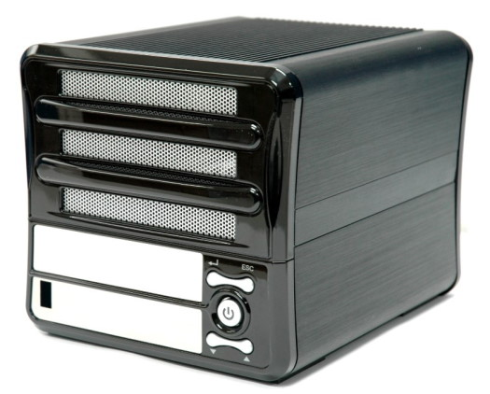
Thecus Technology has retooled the N3200 and come up with the aptly named N3200 Pro -- a brand new NAS now featuring an AMD Geode CPU. The device boasts a veritable cornucopia of features, including three SATA drive bays for up to 3TB of storage, the option of RAID 5 striping, and an LCD display. Photo, iTunes and DLNA-compatible server options as well as browser-based management should assist users with the "digital lifestyle," while a feature called "Web Surveillance Server" allows you to take regularly scheduled photographs just by plugging in a USB webcam... which is interesting in a vaguely creepy way. No word on price or availability but the previous N3200 sells for $339.
[Via: Engadget ] [Tag: n3200 pro, N3200Pro, nas, network attached storage, NetworkAttachedStorage, raid, thecus ]
pureSilicon's rugged Renegade SSD touts hardware-based encryption
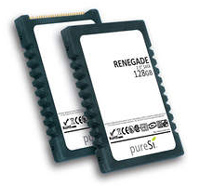
pureSilicon isn't offering up the first rugged SSD or anything, but its Renegade line is still tough enough to be compliant with MIL-STD-810F (and this guy's) standards. Hailed as the first solid state drive to integrate hardware-based encryption approved by the Federal Information Processing Standard (FIPS), the device boasts up to 128GB of capacity, a dedicated on-board cryptographic processor, hard-anodized unibody enclosure and the ability to withstand most anything that you could put it through (save for a blender). Select customers have already received samples, but if you're dumbstruck by such a notion, you'll have to wait with the rest of the citizenry and nab yours in Q1 2009.
[Via: Engadget ]
[Tag: Encryption, MIL-STD-810F, pureSilicon, Renegade, rugged, security, SSD, storage ]
Flying plasmonic lens system could lead to denser chips / disks
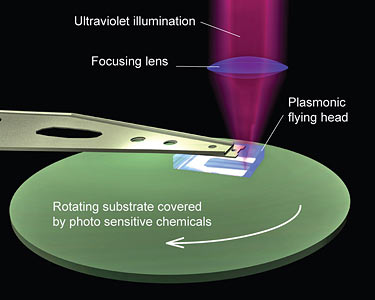
Last we heard, IBM was busy extending optical lithography down to 30-nanometers in order to keep Moore's Law intact, and some two years later, the process is still being honed by engineers at the University of California, Berkeley. Reportedly, gurus there with IQs far greater than ours have developed a new patterning technique (plasmonic nanolithography) that could make "current microprocessors more than 10 times smaller, but far more powerful." Additionally, professor Xiang Zhang asserts that this same technology could eventually "lead to ultra-high density disks that could hold 10 to 100 times more data than disks today." The secret to the madness is a flying plasmonic head, which is compared to the arm and stylus of an LP turntable; the setup enables researchers to "create line patterns only 80-nanometers wide at speeds up to 12-meters per second, with the potential for higher resolution detail in the near future." In layman's terms? That CPU you purchased last month will, in fact, be old hat in due time.
[Via: Slashdot ] [Tag: california, chip, circuit, circuits, CPU, dense, density, integrated circuits, IntegratedCircuits, microchip, Nanotechnology, optical lithography, OpticalLithography, photolithography, processor, research, science, silicon, university, University of California, UniversityOfCalifornia ]
Netflix finally brings 'Watch Instantly' to Macs via Silverlight

In a move that seemed like it would never, ever, ever happen, Netflix has finally managed to bring its streaming video technology (and decent library) to Macs everywhere, thanks to Microsoft's Flash-esque also-ran, Silverlight. It seems that the software will allow the rental house to safely DRM its content where ever it goes via Redmond's Play Ready, thus leaping the hurdle that has kept some 12,000 movies and TV shows off of non-PC systems. Netflix claims that the new implementaiton in Sliverlight provides "breakthrough navigation for fast-forward and rewind," though fails to indicate exactly when this is all being rolled out (we assume immediately). Unfortunately for super-duper late adopters, the software will only work with Intel-based Macs, so if you've been holding onto a G3 for dear life, here's one more reason to finally can it, along with your Xbox 360 HD-DVD player, Von Dutch trucker cap, and gas-guzzling Escalade. Full PR after the break.
NETFLIX BEGINS ROLL-OUT OF 2ND GENERATION
MEDIA PLAYER FOR INSTANT STREAMING
ON WINDOWS PCs AND INTEL MACS
Based on Microsoft Silverlight, New Player Features Enhanced Dynamic Streaming, First-Time Use for Macs and
Breakthrough Navigation for Fast-Forward and Rewind
LOS GATOS, Calif., October 27, 2008 – Netflix, Inc. (NASDAQ: NFLX), the world's largest online movie rental service, today announced it has begun the deployment of Microsoft Silverlight to enhance the instant watching component of the Netflix service and to allow subscribers for the first time to watch movies and TV episodes instantly on their Intel-based Apple Macintosh computers. The deployment, which will initially touch a small percentage of new Netflix subscribers, is the first step in an anticipated roll-out of the new platform to all Netflix subscribers by the end of the year.
Silverlight is designed for delivery of cross-platform, cross-browser media experiences inside a Web browser. It is expected that Netflix members who watch movies and TV episodes instantly on their computers will enjoy a faster, easier connection and a more robust viewing experience with Silverlight, due to the quality built directly into the player. Among the viewing enhancements with the new player is a breakthrough in timeline navigation that vastly improves the use of fast-forwarding and rewinding. The new Netflix player takes advantage of Play Ready DRM, which is built into Silverlight, for the playback of protected content on both Windows-based PCs and on Macs. That had not been possible with previous generation technologies.
"Silverlight with Play Ready offers a powerful and secure toolkit for delivery of dynamic streaming, which offers faster start-up, and higher quality video, adapted in real time to users' connection speeds," said Netflix Chief Product Officer Neil Hunt. "Members who enjoy watching movies and TV episodes from the growing library of choices that can be instantly streamed at Netflix will be thrilled with this next generation improvement of access and quality, on a broader range of platforms, including Intel Macs and Firefox."
[Via: Engadget ] [Tag: breaking news, BreakingNews, drm, film, microsoft, movie, movies, netflix, rental, silverlight, streaming, streaming content, StreamingContent, watch instantly, WatchInstantly ]