Spiga

Power Pack 1 and HP's add-ons make Windows Home Server a real grouch


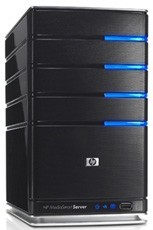
If you've experienced some shockingly slow results from your Windows Home Server-based unit, we've one question for you: do you have Power Pack 1 and the HP add-ons installed? If so, you may not be alone in your frustrations. Apparently a number of users have seen dramatic slowdowns that have rendered their WHS devices nearly unusable. It seems that all the "bloatware" really takes a toll, as the hard drives are constantly pounded and console menus take ages (minutes, to be more precise) to appear. According to Within Windows, the only real solutions are to install more RAM and / or tweak your pagefile configurations afterwards. Anyone else raging mad about the performance issues? What are you going to do about it?
[Thanks, Bryant]

[Via: Engadget ]
[Tag: add-on,hp,performance,power pack 1,PowerPack1,whs,windows,windows home server,WindowsHomeServer ]

Infineon CEO wants to sell flagging Qimonda unit... badly


Little known tidbit for those not keenly watching the happenings at Infineon: the firm was forced to write down the value of its Qimonda stake by €1 billion ($1.57 billion) in April. Not surprisingly, Infineon's head honcho is about ready to rid the company of the flagging unit, making quite a few direct statements in a Germany daily saying as much. For starters, CEO Peter Bauer stated that "a complete sale is possible as is a sale of a minority stake," and he continued by affirming that it was already "speaking to financial investors and other companies in the industry." Just in case you had any doubts whatsoever that this cat was serious, he proclaimed that "[the firm] was working with utmost urgency on the question how to close the chapter on Qimonda as quickly as possible." Unrequited love at its finest.

[Via: Engadget ]
[Tag: business,ceo,exec,for sale,ForSale,industry,Infineon,Qimonda,RAM,sale ]

Buffalo solders up 32GB and 64GB SSDs for Eee PC


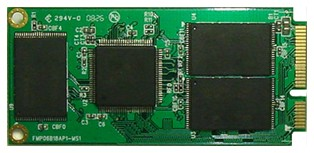
Those fine folks at Buffalo are working on 32GB and 64GB PCI-E SSDs for the Eee PC 901 (and others, we're guessing), to be released in September. That's all well and good, but what's even more exciting are the price points: 32GB will be retailing for around 16,800 yen (about $157 US) while the 64GB will go for 33,600 yen ($313 US). Sure, a storage device the same price as your computer is never ideal, but with SSD prices continuing to plummet -- as evidenced by this nearly-wallet-friendly pair -- they should be in striking distance before long.

[Via: jkkmobile ]
[Tag: 32gb,64gb,buffalo,eee pc,EeePc,pci-e,ssd ]

SimpleTech hops on eco-friendly bandwagon with [re]drive HDD


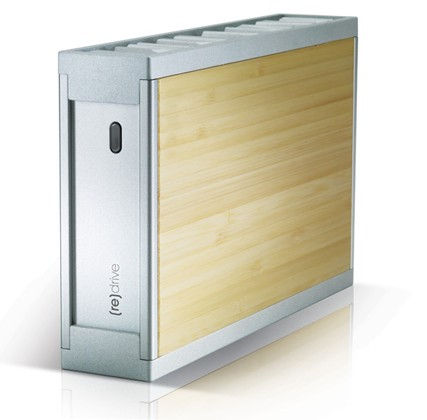
Not that we haven't seen bamboo-based gizmos before, but there's something about SimpleTech's [re]drive that just screams upscale. This elegant, smooth looking external HDD was crafted to be easy on the eyes and Mother Earth alike, with the outfit utilizing "renewable, naturally grown bamboo and recyclable aluminum" along with an Energy Star power adapter and eco-friendly packaging. You'll also find a USB 2.0 jack, automatic power up / down and 500GB of internal storage space. Not too shabby for an estimated $150.

[Via: Wired ]
[Tag: bamboo,eco-friendly,external hard drive,external hdd,ExternalHardDrive,ExternalHdd,fabrik,green,hard drive,HardDrive,hdd,redrive,SimpleTech,wood,wooden ]

Kingston sprinkles 16GB models into DataTraveler line, launches DT101


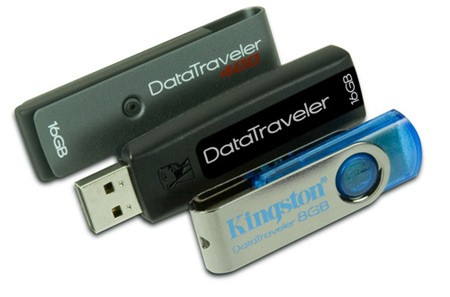
Nothing too fancy from Kingston Technology today, just a couple of more capacious flash drives and an all new one for good measure. For starters, the DataTraveler 400 with MigoSync software and the DT100 are both now available in roomy 16GB flavors. Meanwhile, the DT101 arrives on the scene with security software, capacities up to 8GB and in cyan, pink and yellow hues. Each of the newcomers should be available now, with the 16GB DT400 demanding $196, the 16GB DT100 costing $85 and the DT101 line ranging from $14 to $44.

[Via: BIOS Magazine ]
[Tag: DataTraveler,DataTraveler 400,Datatraveler400,DT100,DT101,DT400,flash drive,FlashDrive,Kingston,usb drive,usb flash drive,usb key,UsbDrive,UsbFlashDrive,UsbKey ]

Eee hard drive, optical drive, and 3G card continue to reduce meaning of Eee brand


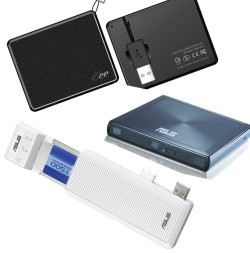
Okay, so there's clearly a tube that dispenses marshmallows to the ASUS marketing department whenever it comes up with another product to slap the Eee brand on, because this just getting silly. In addition to the countless Eee laptops, Eee Box desktop, Eee monitor, Eee televisions, and other Eee-branded crap, we're hearing the company is working on a line of accessories, including an external hard drive, optical drive, and WWAN card. None of this is official quite yet, but knowing ASUS, it'll be out in 30 different varieties by the end of the month.

[Via: Engadget ]
[Tag: asus,eee,eee accessories,eee pc,EeeAccessories,EeePc,hard drive,HardDrive,optical drive,OpticalDrive,wwan ]

Buffalo's Blu-ray burner hits 8x, BDA says wha?


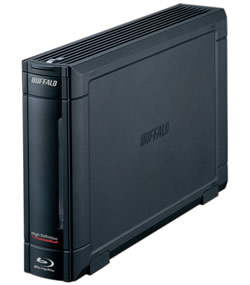
For what it's worth, Buffalo just announced the world's fastest Blu-ray recorder capable of burning through your data at an 8x clip. The only problem is that BDA-approved media maxes out at 6x, assuming you can even find it. Available in Japan starting next month, the external USB 2.0 and eSATA BR-816SU2 and internal SATA BR-816FBS models hit that 8x recording speed on single-layer BD-R media only -- 2x for dual-layer BD-R, BD-RE, and LTH BD-R. CDs and DVDs are supported too naturally, with a max 16x burn to DVD±R or 48x/24x for CD-R/RW. Each drive comes bundled with Cyberlink's PowerDVD 7 suite and are priced at ?46,700 (about $435) for the external drive or ?41,000 (about $380) for the internal optical spinner.

[Via: BIOS ]
[Tag: 8x,bd-r,blu-ray,blu-ray burner,Blu-rayBurner,BR-816FBS,BR-816SU2,buffalo,burner ]

Western Digital intros 2.5-inch 10,000RPM VelociRaptor HDD


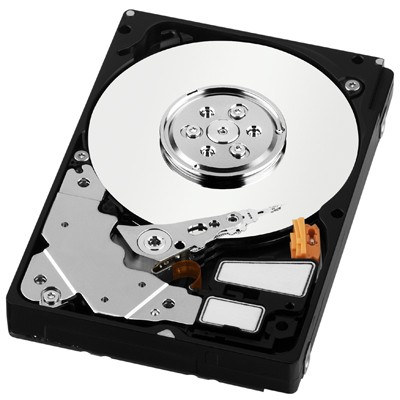
Western Digital has been flaunting its VelociRaptor for some time now, but the drive you've been slamming into towers is now available for low-power, high-performance blade server applications. The 2.5-inch, 10,000RPM enterprise SATA drive (WD3000BLFS) is specially designed to fit snugly within 1U and 2U rack servers, and aside from consuming 35% less power than the previous Raptor drive, this one is available with up to 300GB of capacity. You'll also find 16MB of cache and a 1.4 million mean time before failure rating, though you won't be able to procure one until later this month for an undisclosed price.

[Via: Engadget ]
[Tag: enterprise,hard drive,HardDrive,hdd,sata,VelociRaptor,WD,WD3000BLFS,western digital,WesternDigital ]

Texas Memory breaks records, budgets with blisteringly fast RamSan-440 storage device


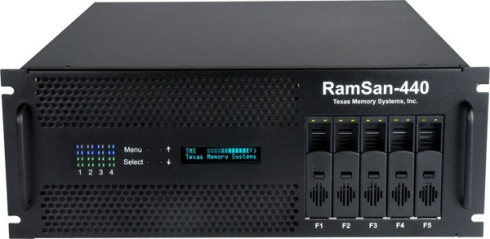
Texas Memory has been around longer than most of you readers have been alive (or so we're told by our resident omniscient overlord), but it's been quite awhile since it was talked about freely in the same breath as WD, Fujitsu, Samsung, et al. Now, however, the company is making the rounds once more thanks to its "record setting" RamSan-440, which provides between 256GB and 512GB of RAM-based SSD storage, 600,000 IOPS, 4,500MB/sec random sustained external throughput and latency under 15-microseconds. The entire rig arrives in a 90-pound 4U rack-mount enclosure and claims to be "the first SSD to use RAIDed NAND flash memory modules for data backup." Chances are, you were already bracing to hear a pretty ludicrous figure when it comes to pricing, but $150,000 for the 256GB edition and $275,000 for the 512GB iteration? Please -- we'll take a Lightning GT, thanks.

[Via: DailyTech ]
[Tag: iops,milestone,RamSan-440,record,speed,ssd,test,texas memory,TexasMemory ]

$2,000 Giant Twist Freedom DX electric bicycle gets pedaled on video


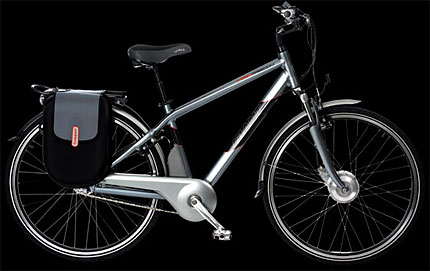
For those balking at the $2,000 price tag, you should really take a look at the competition before scrunching your nose up and walking away. That being said, two large is still a lot to drop on something that could still require at least some bodily exertion, but a recent video review over at Popular Mechanics could help you determine whether this particular bike is worth you while. The Giant Twist Freedom DX can roll up to 75 miles on a mixture of battery and human-powered pedaling, and the motor touts three different modes (Eco, Normal and Sport) to satisfy your mood / riding requirements. Nah, Ironman participants won't want anything to do with this heap, but those looking for a greener (and oftentimes quicker) way to commute in the city may find lots to love. The video, as promised, is waiting in the read link.

[Via: Digg ]
[Tag: bicycle, bike, eco-friendly, electric bike, ElectricBike, Freedom DX, FreedomDx, Giant, Giant Twist, Giant Twist Freedom DX, GiantTwist, GiantTwistFreedomDx, green, review, reviewed, vehicle, video ]

Super Talent makes MasterDrive MX SSDs slightly faster


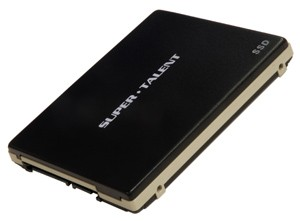
With the prices of SSDs sinking daily, Super Talent is hoping to grab a few eyes by offering faster drives at comparably low price points. According to a data sheet posted up on the firm's website, its MasterDrive MX line of SSDs now features a maximum read rate of 120MB/sec, while write speeds range between 60MB/sec (15GB and 30GB) and 80MB/sec (60GB and 120GB). Reportedly, the drives used to boast write speeds of 40MB/sec. A minor boost, sure, but a welcome increase all the same.

[Via: DailyTech] ]
[Tag: MasterDrive,MasterDrive MX,MasterdriveMx,mx,speed boost,SpeedBoost,ssd,super talent,SuperTalent ]

Hitachi promotional video highlights Tera Era, effects of hallucinogens


We're not too sure how the advertising director that green lit Hitachi's bizarro perpendicular recording video is still on staff, but sure enough, he / she has been cut loose again as evidenced by the latest spot. We knew the outfit was pushing this whole "Dawn of the Tera Era" slogan with the introduction of its Deskstar 7K1000.B, but this is just taking things entirely too far. Fair warning: the video hosted after the jump contains cartoon scenes that could easily be used by D.A.R.E. officials looking to keep kids from trying drugs, but somehow we get the impression its just a plug for having lots of (Hitachi-branded) storage space. Hmmph.


[Via: Engadget ]
[Tag: advertisement,advertising,comedy,commercial,funny,hitachi,promo,promotion,tera era,TeraEra,video,weird ]

SanDisk CEO says Vista "not optimized" for SSDs


SSDs have been quite the hot topic of late, with conflicting power usage reports and free-falling (almost) prices being the two angles most commonly yapped about. Now, however, we have a completely different reason to mention 'em in passing, as SanDisk's dutiful CEO let loose some questionable comments during its Q2 2008 earnings call. Noting that Windows Vista would present unique challenges for SSD manufacturers, he stated that "as soon as you get into Vista applications, you start running into very demanding applications because Vista is not optimized for flash memory solid state disk." Furthermore, he proclaimed that the "next generation controllers need to basically compensate for Vista shortfalls," and finished things up by asserting that "SSD performance in the Vista environment falls short of what the market really needs." It seems all those statements were just used to deflect blame for it being behind schedule, but we're a bit curious about how it intends on defending said statements with real-world numbers. Hmm?

[Via: Engadget ]
[Tag: MLC,optimized,sandisk,ssd,vista,windows ]

CherryPal PC Offers Subscription-free Cloud Computing That Runs Off Two Watts of Power [Cloud Computing]


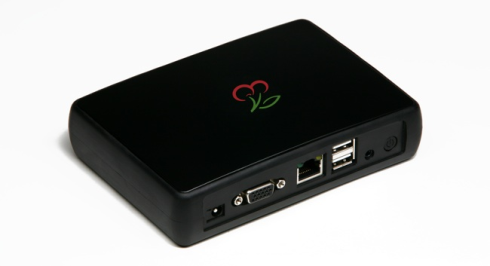
CherryPal's cloud-based computer is unique because it offers the technology without subscription costs, and only draws two watts of power. The machine has no moving parts, and uses hardware encrpytion to provide a secure link to the cloud (which is run by Amazon).
To offset the costs of the cloud server, short ads are inserted whenever you open a program, but appear at no other time, to remain relatively unobtrusive. Though the device only has a 400 MHz Freescale MPC5121e mobileGT processor and 256 MB RAM, its user experience factor doesn't drop off because most of the work is done in the cloud. In fact, you are hardly exposed to the Linux-based OS because nearly everything is run from a modified version of Firefox. CherryPal PC also has a 4 GB NAND Flash storage, 802.11g wi-fi, two USB 2.0 ports, 10/100 ethernet, VGA out, and headphone out. It has a footprint of roughly 6 inches by 4 inches and is about an inch tall. It also comes out of the box with programs like iTunes, Open Office, custom media player and IM client, with more programs to appear. Each computer's has a cloud storage limit of 50 GB, which is likely to be expanded. Max Seybold, the CherryPal Founder and CEO, said the hardware is nearly indestructable, and claims you could play tennis with the box and it would still work fine. He sees the CherryPal as a computer for developing nations, schools and/or teenagers who only need a computer to write a paper, listen to music, or browse the internet. The CherryPal is available now and will start shipping at the end of the July for $249.
CherryPal Announces World’s First Two-watt, $249 Personal Computer
Ultra-green PC has no moving parts; 80 percent few components MOUNTAIN VIEW, Calif. (July 21, 2008) – CherryPal, Inc., maker of green, affordable, easy-to-use personal computers, today formally launched its CherryPal™ cloud computer, the most energy efficient and affordable desktop computer available. CherryPal is a completely new type of PC that has no moving parts, contains 80 percent fewer components, uses only two watts of power, and is highly secure. The CherryPal, which is currently available for pre-orders, retails for $249 and requires no monthly subscription fee and no other hidden costs. “Today’s typical PC is based on a computing model created 25 years ago, before the Internet, web browsers and global warming,” said CherryPal CEO, Max Seybold. “We have developed a new computing model that makes CherryPal the easiest to use, greenest, most affordable computer available today.”
CherryPal is the Greenest and Most Affordable The CherryPal desktop consumes just two watts of power, compared to the 65 watts of power used by the average desktop machine, delivering a 97 percent decrease in energy consumption. In addition, it also uses 80 percent fewer components, dramatically reducing the amount of resources it takes to manufacture a PC. And because there are no moving parts, the CherryPal desktop can last a decade or longer, eliminating the need to replace a computer every 2-to 3 years.
CherryPal is the Easiest PC to Use The CherryPal desktop is dead simple to set up and boots in 20 seconds. Users simply enter a username and password to access the CherryPalCloud, which offers an incredibly simple, intuitive interface. CherryPal has no exposed operating system, so all application and functions are managed solely by a Firefox-based browser. CherryPal does all operation system and application upgrading and installation, meaning there is no maintenance required. Because there are no moving parts, there is little possibility of hardware failure. CherryPal also offers a free 24/7 helpline. The CherryPalCloudв„ў Innovation CherryPal has removed the hassle from personal computing by moving most of the software and data that traditionally sits on the desktop to the Internet. Instead of accessing programs and data from your desktop computer, the majority of information is processed and stored on the web in a highly secure environment called the CherryPalCloudв„ў, which is automatically accessed at boot-up. The CherryPalCloud removes many of the headaches typically associated with traditional personal computers, including: application downloads, software upgrades and crashing operating systems, because everything is maintained in the CherryPalCloud by CherryPal administrators;
viruses and hackers, because the user’s hardware is no longer exposed to local bugs and viruses;
lag time, because the majority of cumbersome software applications are stored in the CherryPalCloud, the computer operates just as fast – if not faster – than a traditional PC. CherryPal HyperCloud™ Technology CherryPal is the only company that provides a patent-pending combination of both hardware and software encryption, making it highly secure. The CherryPal also offers a patent-pending single software layer technology. This collapses the operating system and browser into one layer, where there had traditionally been three separate layers. It makes the computer exponentially faster and virtually eliminates any risk of bugs or viruses for the user. CherryPal is also the first company since Apple Computers to use a Power Architecture-based processor in a personal computer by employing the Freescale MPC5121e mobileGT processor. This chip allows for built-in graphics and audio processing, all while consuming only 400 MHz of power. The CherryPal Hardware Specs:
Freescale’s MPC5121e mobileGT processor, 800 MIPS (400 MHz) of processing
256MB of DDR2 DRAM
4GB NAND Flash-based solid state drive
WiFi 802.11b/g Wi-Fi
Two USB 2.0 ports
One 10/100 Ethernet with RJ-45 jack
One VGA DB-15 display out jack
Headphone stereo audio out 3.5mm jack
9vDC 2.5mm10 watt AC-DC adapter power supply
10.5 ounces
1.3” high, 5.8” x 4.2” wide CherryPal Software CherryPal’s operating system is based on a version of open source Debian/GNU Linux that has been highly customized; the browser is based on a version of open source Firefox.
The user applications currently available are:
OpenOffice.org office productivity suite;
iTunes;
A CherryPal-brand media player that supports all common files formats;
A CherryPal-branded instant messenger that supports all common IM programs.
More programs will be added on an on-going basis. The current storage limit is initially set at 50 gigabytes (GB), although the limit will likely be increased in the future. CherryPal’s Business Model CherryPal is rolling out a robust “Brand Angels” program that uses advocates and users as its sales force. Brand Angels will communicate their honest experiences with the CherryPal product in exchange for a free CherryPal desktop. Brand Angels receive a small commission for each system sold; buyers also receive a small discount when they purchase their CherryPal from a Brand Angel.
CherryPal’s revenue model is based on advertising, which will be rolled out later this year. However CherryPal’s technology does not allow anyone to view any information about its customers. Pricing and Availability The CherryPal is now available for pre-orders in the United States for just $249, with no monthly subscription or hidden fees at www.cherrypal.com. Orders will begin shipping at the end of this month.
For more information on CherryPal and its desktop product, please go to www.cherrypal.com, where its new web also launched today.


[Via: Gizmodo, The Gadget Blog ]
[Tag: ]

Windows Home Server Power Pack 1 goes live


That nasty Windows Home Server data corruption bug might finally be a thing of the past, as WHS Power Pack 1 has gone live after a month-long beta test. Not much else to the enhancement suite: x64 support and support for backup to external media are along for the ride, but otherwise it's mostly performance tweaks. Go on and grab it now, you crazy home-server admins.
[Thanks, Neal]

[Via: Engadget ]
[Tag: beta,bug,data corruption,microsoft,power pack 1,PowerPack1,windows home server,windows home server power pack 1,WindowsHomeServer,WindowsHomeServerPowerPack1 ]

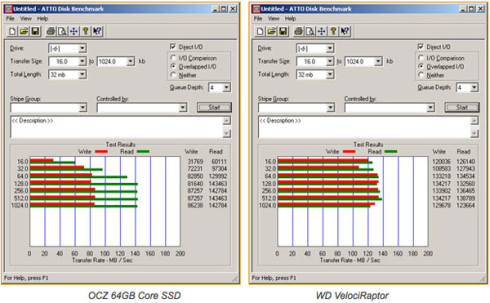
OCZ Core SSD vs WD VelociRaptor: the early performance numbers are in

OCZ Vs. VelociRaptor


Now that all the SSD efficiency drama has mellowed out a bit, the guys over at Hot Hardware got their hands on an OCZ Core Series SATA II 64GB SSD and already pitted it against a WD VelociRaptor. The early numbers are impressive: The OCZ averaged read speeds of over 140MB/s and was writing at 87MB/s while the WD topped out at around 136MB/s read and 134MB/s write times. When it comes to applications and random-access times, though, the OCZ SSD scored some crazy fast times. In Windows Defender, gaming, photo import, and Vista startup tests, the SSD was getting things done at as much as 5 times the speed of the VelociRaptor. Sure, the tests are incomplete, but the future is undoubtedly bright for solid state storage once prices roll into realistic range.

[Via: Engadget ]
[Tag: ocz,ocz core series,OCZ Core Series SATA II 64GB SSD,OczCoreSeries,OczCoreSeriesSataIi64gbSsd,velociraptor,wd ]

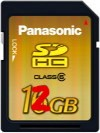
Panasonic throws down 6 and 12GB SDHC cards


Launching 6 and 12GB SDHC cards seems a little boring at this point, especially when your company has already gone way, way larger. Which is why Panasonic's got the 6 and 12GB RP-SDM06G and RP-SDM12G class 4 (10MBps) SDHC cards which are apparently "designed for HD recording." Love when they do that.

[Via: Engadget ]
[Tag: panasonic,RP-SDM06G,RP-SDM12G,sd,sdhc ]

Photonic breakthrough could mean 60x faster internet speeds


Every so often, we get wind of some new "breakthrough" from a few guys / gals in a lab that promises to simply revolutionize the web. A team from the University of Sydney is the latest bunch to do so, claiming that a piece of scratched glass (or a Photonic Integrated Circuit, if we're being proper) could enable internet speeds 60 times faster than "current Australian networks." Essentially, the "circuit uses the scratch as a guide or a switching path for information," and the resulting product is "photonic technology that has terabit per second capacity." Call us when you folks get everything ironed out -- we'll be over at Sigbritt Lothberg's house.


[Via: The Future of Things ]
[Tag: australia,bandwidth,CUDOS,internet,Photonic,research,speed,transmission,university ]

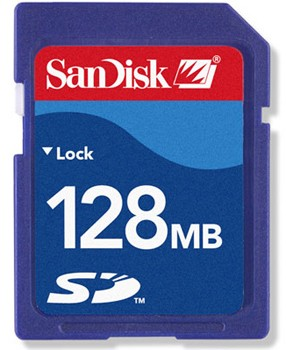
SanDisk introduces write-once WORM SD cards


SanDisk has been toying with this for eons, but it seems the pieces finally fell in place for the firm to kick out its very first write-once memory card. The cleverly titled WORM (Write Once Read Many) SD card will predictably be aimed at industries where unalterable content is vital, such as police investigations, court testimony, electronic voting, etc. According to SanDisk, there is "no physical way to alter or delete individual recorded files," but we'd wager that hackers at large would have a thing or two to say about that. Nevertheless, said units tout a 100-year archive life when kept under appropriate storage conditions, and while a 128MB iteration is the only one available now (more capacious versions are forthcoming), you'll have to "inquire" to see just how inflated the pricing is.

[Via: Engadget ]
[Tag: flash,flash memory,FlashMemory,read-only,sandisk,sd,WORM,WORM card,WormCard,write-once ]

Dell Selling 128GB SSDs in Notebooks for $600 [Ssd]


Erica Ogg of CNet informs us that hot on the heels of the $500 price cut for the MacBook Air's 64GB SSD, Dell is offering a 128GB SSD for $600 in their "Latitude, XPS, Alienware and Precision laptop models." I'm glad to see these things moving toward more reasonable prices so quickly, perhaps thanks to recent news of Samsung's cheaper production of parts, but it can never be quick enough. [CNet]

[Via: Gizmodo, The Gadget Blog ]
[Tag: ]

Dell's Latitude XT tablet goes multi-touch with a free upgrade, offers 128GB SSD for $649


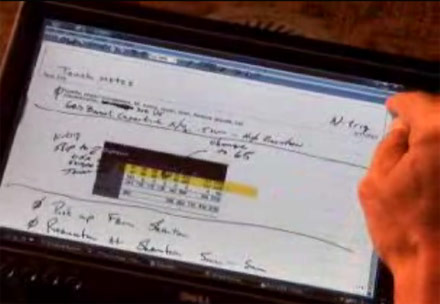
As promised, Dell is offering a free software upgrade for its Latitude XT tablet, unleashing the multi-touch capabilities of its capacitive touch screen at last. The free download allows you to do two finger scrolling, zooming and use programmable double tap functions directly on the screen. Dell's also adding a new 128GB SSD option for $649 to its Precision and Latitude systems, with the XPS and Alienware laptops to follow next week. The Latitude XT software and new SSD drives will be available tomorrow, and Dell promises a brand new Latitude laptop line "in the coming weeks," which we're sure will be taking advantage of Intel's new Centrino 2 chips. Video of multi-touch in action is after the break.


[Via: Engadget ]
[Tag: breaking news,BreakingNews,dell,latitude xt,LatitudeXt,multi-touch ]

Seagate Barracuda 7200.11: 1.5TB of love


You know, we're not actually certain we want to trust 1.5TB of our precious precious NES ROMS invaluable work data to a single drive, but that doesn't mean Seagate's latest Barracuda isn't droolworthy regardless. The jump from 1TB to 1.5TB is the "largest capacity hard drive jump in the more than half-century history of hard drives," according to Seagate, and the perpendicular-recording drives should begin shipping in August. There are also a pair of Momentus 2.5-inch 500GB notebook drives coming in Q4 in 5400 and 7200RPM speeds, but like big brother, pricing is unavailable -- we've got a hunch you might want to start saving those pennies, though.
[Thanks, Dave]

[Via: Engadget ]
[Tag: 1.5tb,5400.6,7200.11,7200.4,barracuda,barracuda 7200.11,Barracuda7200.11,hard drive,HardDrive,hdd,momentus,momentus 5400.6,momentus 7200.4,Momentus5400.6,Momentus7200.4,seagate ]

Belkin revamps routers, introduces N+ gear, new powerline devices


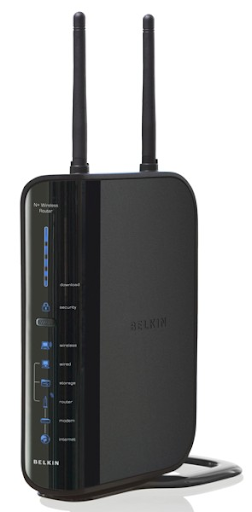
Belkin isn't just touting its new FlyWire gear today, it's also taking the opportunity to introduce the new F5D8235-4 N+ Wireless Router, which brings with it a new design language for all of the company's networking gear. The vertically-oriented unit features four Gigabit Ethernet port, a USB port to attach storage devices, push-button WPS security, and front-panel icons that turn from blue to amber if there's a problem on the network. Not bad for $120, but we'll save our love for the 5GHz gear. (There's also an N unit without Gigabit ports and a pair of G routers, but really, who cares?) In addition, there's a matching $99 USB WiFi adapter that shares the glossy black finish, and while we're at it, let's throw in three Powerline kits: a $179 three-port 200Mbps adapter,, a $149 200Mbps adapter two-oack, and a $99 85Mbps two-pack. Photos of the stick and Powerline gear after the break.


[Via: Engadget ]
[Tag: belkin,F5D4073,F5D4074,F5D4075,F5D7234-4,F5D8055,F5D8235-4,F5D8236-4,F5D9231-4,n wireless router,N WirelessRouter,powerline,powerline av,PowerlineAv ]

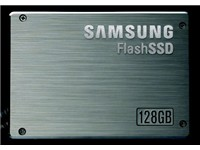
Samsung's low-power 128GB SSDs go mass production on the cheap


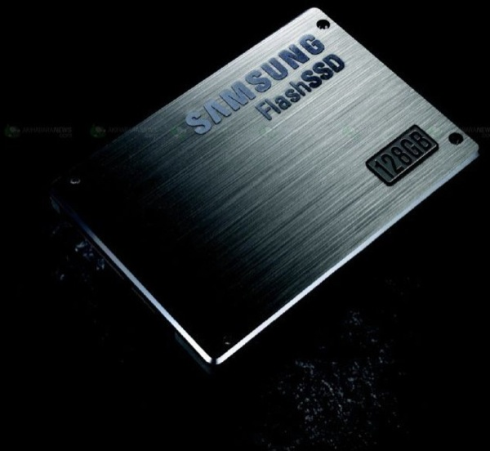
Good news on the SSD front. Announced back in January, Samsung is now mass producing its 1.8- and 2.5-inch SSDs in both 64GB and 128GB capacities. And since these SATA II SSDs are based on MLC -- 64 MLC NAND flash chips of 16 gigabits each in the 9.5-mm thick 128GB SSD -- you can expect them to be cheap by comparison to SLC-based SSDs and faster by comparison to traditional laptop hard disk drives while lasting about 20 times longer than the expected 4-5 year life span of that mechanical spinner. We're talking 70MB/s writes and 90MB/s reads and power consumption rated at just 0.2-watts idle or 0.5-watts when active -- far less than any of the models (including the SSDs tested by LAPTOP) tested by Tom's which should help put any battery consumption concerns to rest. Heaping happy on top of good, Samsung tells us to expect the 256GB SSD to go mass production by the end of the year. Clap clap clap.

[Via: Engadget ]
[Tag: 128gb,16 gigabit,16Gigabit,64gb,mlc,nand,samsung,ssd ]

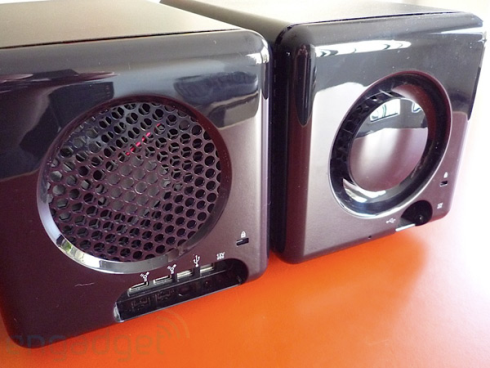
Drobo (second-gen) mini-review


Despite its shortcomings, we were pretty into the original Drobo when it was launched about a year ago. Not only is it crazy easy to set up and get running, but being able to swap out drives and continuously expand your storage pool without completely replacing your array is obviously advantageous compared to traditional RAID arrays. So it kind of goes without saying that we were stoked to hear Data Robotics was launching a new Drobo, which promised FireWire 800, and quieter, faster operation.
We were kind of hoping they'd get it over with and build in Ethernet (or at least WiFi) connectivity instead of continuing to charge an extra $200 for the DroboShare add-on -- that it comes without left us with some mixed feelings. But then again, this new model doesn't cost any more than the first-gen product ($500), so we can't hold it too much against 'em -- and as we found, it is a fair amount faster (and significantly quieter) than its predecessor. Read on for more.
We won't dwell much longer on the fact that Drobo still doesn't have its own network connectivity (and if we were gamblers, our money would be on integrated DroboShare whenever the third-gen device comes out), but if you're not planning on connecting your device directly to your computer, be prepared for the extra cash outlay. The upshot, however, is that the DroboShare will soon be able to host on-board applications and servers ("DroboApps") that make use of your Drobo's storage pool, potentially giving your whole setup a great deal more value. That is, assuming the developer community puts some weight behind the recently released SDK (more on that here).
Now, before we get to our experiences with the device, we feel obligated to take a moment to note that our unit suffered from a strange series of random, somewhat jarring reboots. Data Robotics seems to have narrowed the issue down to a pre-production power Y-connector from our early DroboShare that was causing power shorts on the new device. We haven't seen the issue pop up again since they replaced the connector, and Data Robotics assured us that they've tested their hardware and software extensively, never having seen the issue we experienced -- so we'll give them the benefit of the doubt.
Anyhow, if you're just in it for the speed, we found the new Drobo does deliver -- although maybe not on the same levels demonstrated by Data Robotics. Their tests show fairly consistent speed increases of over 2x on writes and between 60-100% on reads using AJA Kona. We did all our tests using Xbench, which showed more conservative improvements over the first-gen device. Using a set of four varied SATA drives, we got somewhat smaller speed increases over USB, usually in the range of 10-20%. Occasionally we got up to 100%+ on some operations (like 4k block uncached random writes) -- but on other operations the new Drobo was actually a slight bit slower (like 256k random uncached reads).


Over FireWire 800, the gains were sometimes much more pronounced -- over 100% faster than first and second-gen Drobo's USB 2.0 when performing 256k random uncached reads, for instance. But with numerous results stuck within a window of 10-33% faster than USB 2.0, often our FireWire tests weren't completely explosive. Simple, large (1.25GB) file copy tests showed that USB 2.0 transfers were about 9% faster in the second-gen Drobo, and an encouraging 49% faster over FireWire 800. If you're working with huge amounts of data, that kind of speed can really tend to add up. (Although it's also worth mentioning that if you're looking for blinding throughput for doing things like editing huge full-HD video streams, you're probably not after a device like the Drobo or competing storage / NAS enclosures anyway, and should likely looking for something a little more on the enterprise / workstation-class end of the spectrum.)
If it fits the bill for what you're looking for, the second-gen Drobo is still our favorite home and prosumer storage device in this class. The new interface and speed increases are easy to appreciate, but even if you trade those in for slower access over a network-attached DroboShare, you still stand to take advantage its forthcoming DroboApps and unusually simple auto-mounting system. And running four hot 7200 RPM drives -- which should be fairly high up on the device's thermal envelope -- the new model is indeed noticeably quieter than its predecessor, even despite the unfortunate loss of the previous model's jet engine exhaust motif. Dropping $500 on a device with no included drives (or even network access) is still pretty tough to swallow for many buyers, but the benefits of having a dynamically expandable, redundant, easy to manage storage pool are still as strong an incentive as ever to be a little spendy -- if not on a Drobo, than perhaps on a ReadyNAS with X-RAID. It's your data, after all, so treat it right.

[Via: Engadget ]
[Tag: data robotics,DataRobotics,drobo,features ]
Data Robotics announces second-gen Drobo with FireWire 800


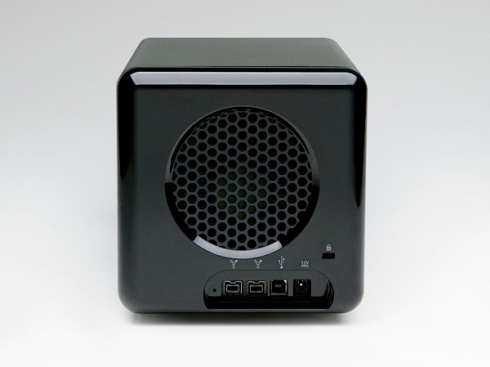
For those whose major complaint about the Drobo was its lack of FireWire 800, today's your day. The new version of the virtualized-storage device features the much requested interface (and a second port for daisy-chaining), but despite the fact that it still lacks built-in Ethernet / WiFi, it does come equipped with an upgraded processor to better take advantage of FireWire 800's higher throughput, as well as a much larger, quieter case fan. Data Robotics claims their new model can achieve data transfer speeds of more than 2x over the original model, as well as outperform ReadyNAS and LaCie models (in RAID 1/5) when tested with identical drives.
The price stays the same at $500 for the device itself, and (as before) you can buy it bundled with two 1TB drives (for $900) or four 1TB drives (for $1,300). For those waiting for the price to dip even lower, Data Robotics is also clearing out inventory on its earlier model; until they sell out, first-gen Drobos will be going for $350, or $750 and $1,075 bundled with two and four 1TB drives, respectively.

[Via: Engadget ]
[Tag: breaking news,BreakingNews,data robotics,DataRobotics,drobo,firewire,firewire 800,Firewire800 ]

Pioneer's Blu-ray disc hits 400GB across 16-layers


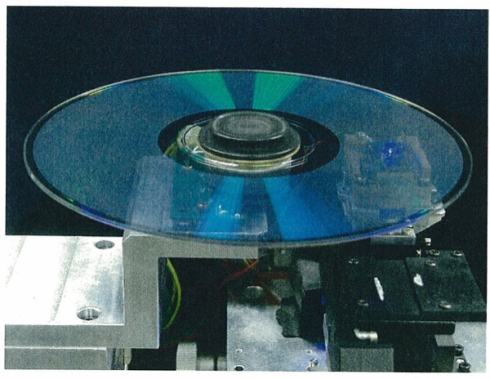
16-layers -- that's how many layers it takes to the hit the center of a 400GB Blu-ray disc, pops. That's 25GB per layer just like those dual-layer 50GB discs available for retail. Best of all, the technique used by Pioneer is expected to be backward compatible with existing Blu-ray gear since the specs and lenses required for pickup are identical. The prototype is read-only for the moment but R&D's on it so let's give them some time to work it out.
Update: Now that the English press release is out, it's less clear whether the new media -- whenever it might come to market -- will work in existing Blu-ray players or not. While "it is possible to maintain compatibility between the new 16-layer optical disc and the BD discs," players would seemingly require a modified optical pick-up mechanism to see the data. We'll learn more on July 13th when Pioneer discusses the breakthrough in detail.

[Via: Impress ]
[Tag: 16-layer,400gb,bd,blu-ray,pioneer,prototype ]

Linksys announces WRT610N simultaneous dual-N band router


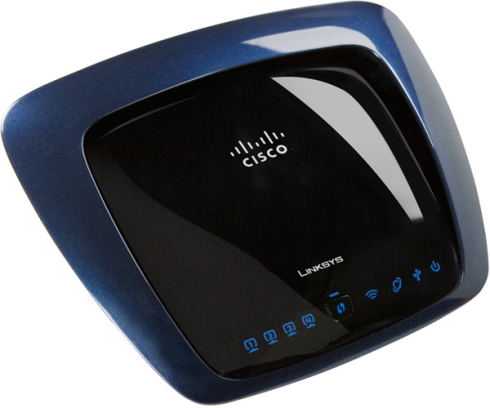
Linksys, er, sorry, that's Linksys by Cisco, is announcing the WRT610N this morning, a new simultaneous dual-N band router that enables it to use 802.11n WiFi on both 5 and 2.4GHz at the same time. This means, of course, that your higher throughput, shorter-distance devices can get the highest-speed 802.11n access at the same time as the rest of your devices can get the usual, more compatible 2.4GHz access they look for. It's on sale now for $200.
[Via: Engadget ]
[Tag: 802.11n,breaking news,BreakingNews,cisco,linksys,WRT610N ]

Nyko's Media Hub for PS3 inelegantly adds USB ports, multicard reader


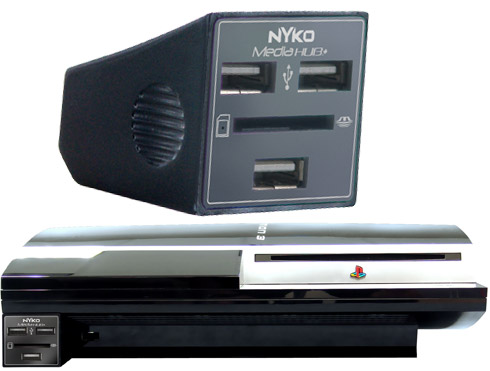
Nyko's got a knack for delivering some of the ugliest, most preposterous third-party peripherals on the planet, yet -- for whatever reason -- we can't help but love 'em. The latest abomination from the outfit that begins to grow on you almost immediately is the Media Hub for PlayStation 3. For those that went cheap on the 40GB PS3 and missed out on a multicard reader and the full array of USB ports, this here adornment presumably connects to one of those USB sockets and adds three more while tossing in the card reader you've so dearly missed. Thankfully, Nyko's only charging $19.99 for this, so you should be okay even if your ship has yet to come in.

[Via: Joystiq ]
[Tag: Media Hub,Media Hub for PS3,MediaHub,MediaHubForPs3,multicard reader,MulticardReader,Nyko,peripheral,playstation 3,Playstation3,ps3,sony,usb hub,UsbHub ]

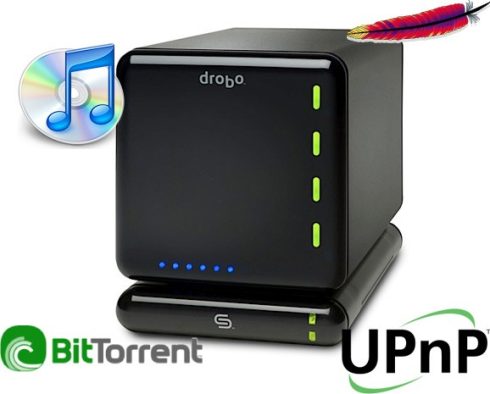
Drobo gets dev community and SDK beta: run UPnP, BitTorrent, and any other servers you want


Looks like Data Robotics just started up their Drobo Developer Community (DDC) and SDK program, kicking off on their eventual goal to let users develop their own apps and servers for their Drobo storage device. For the first "DroboApp" and proof-of-concept, they've already whipped up a working UPnP / DLNA server for streaming audio and video content directly from the Drobo to compliant devices (like the Xbox 360 and PS3, for example), and they hope the early beta offering will spur the community into developing drop-in servers for things like iTunes music and AFP, Rsync, FTP, web, BitTorrent, and anything else you can think up. (One Linux developer has already ported the Drobo Dashboard app to Linux using the SDK).
The DroboApps themselves are compiled for Linux, stored on the Drobo, added via drag and drop into a simple directory on the file system, and run on the Linux-based DroboShare hardware (meaning you won't be able to take advantage of DroboApps with a bare Drobo). Exciting stuff for the storage geeks in the house, especially those looking for some of the extensibility of Microsoft's Windows Home Server platform

[Via: Engadget ]
[Tag: breaking news,BreakingNews,data robotics,DataRobotics,drobo,droboapps,droboshare,sdk,software ]

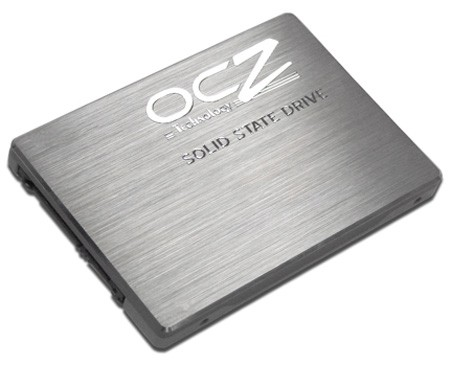
OCZ reveals Core Series SATA II 2.5 SSDs: 128GB for $479


?Aye carumba! OCZ Technology just made us do a double take this morning with the introduction of its all new Core Series SATA II 2.5 SSDs. Hailed as the "world's first truly affordable high-performance SSD for consumers," these drives check in at $169 (32GB), $259 (64GB) and $479 (128GB), which -- as you undoubtedly recognize -- are amazing price points. Each unit utilizes NAND flash technology, possesses a 1.5-million hour mean time before failure and delivers 120 - 143Mbps read / 80 - 93Mbps write speeds. The sub-0.35ms seek times are also worthy of a tip of the hat, and the low power consumption just makes things unnecessarily sweeter. OCZ doesn't mention a definitive ship date, but we're hoping that "available" mention means "right now."

[Via: Electronista ]
[Tag: nand,now shipping,NowShipping,OCZ,OCZ Technology,OczTechnology,sata II,SataIi,shipping,ships,solid state drive,SolidStateDrive,ssd ]

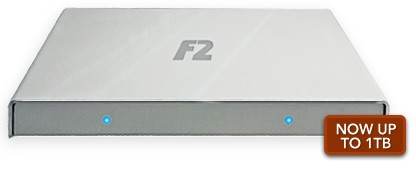
Sonnet's Fusion F2 portable RAID solution hits 1TB


For budding audio / video editors that can't stand to leave home without a RAID setup in tow, you should probably give Sonnet's incredibly mobile Fusion F2 a look. This portable SATA RAID solution now tops out at 1TB (a 640GB model is also available) and features an eSATA connector, fanless design and compatibility with Sonnet's Tempo SATA ExpressCard/34 card. Within the 1.22-pound, 5.9- x 6.2- x 0.72-inch enclosure, you'll find a pair of 2.5-inch 7,200RPM HDDs that are able to deliver 134MB/sec read and write rates. Word on the street places a $995 price tag on the 1TB edition, which is all set to ship "early this month."

[Via: Macworld ]
[Tag: 1tb,esata,Fusion F2,FusionF2,hard drive,HardDrive,portable raid,PortableRaid,raid,sata raid,SataRaid,Sonnet,storage ]